
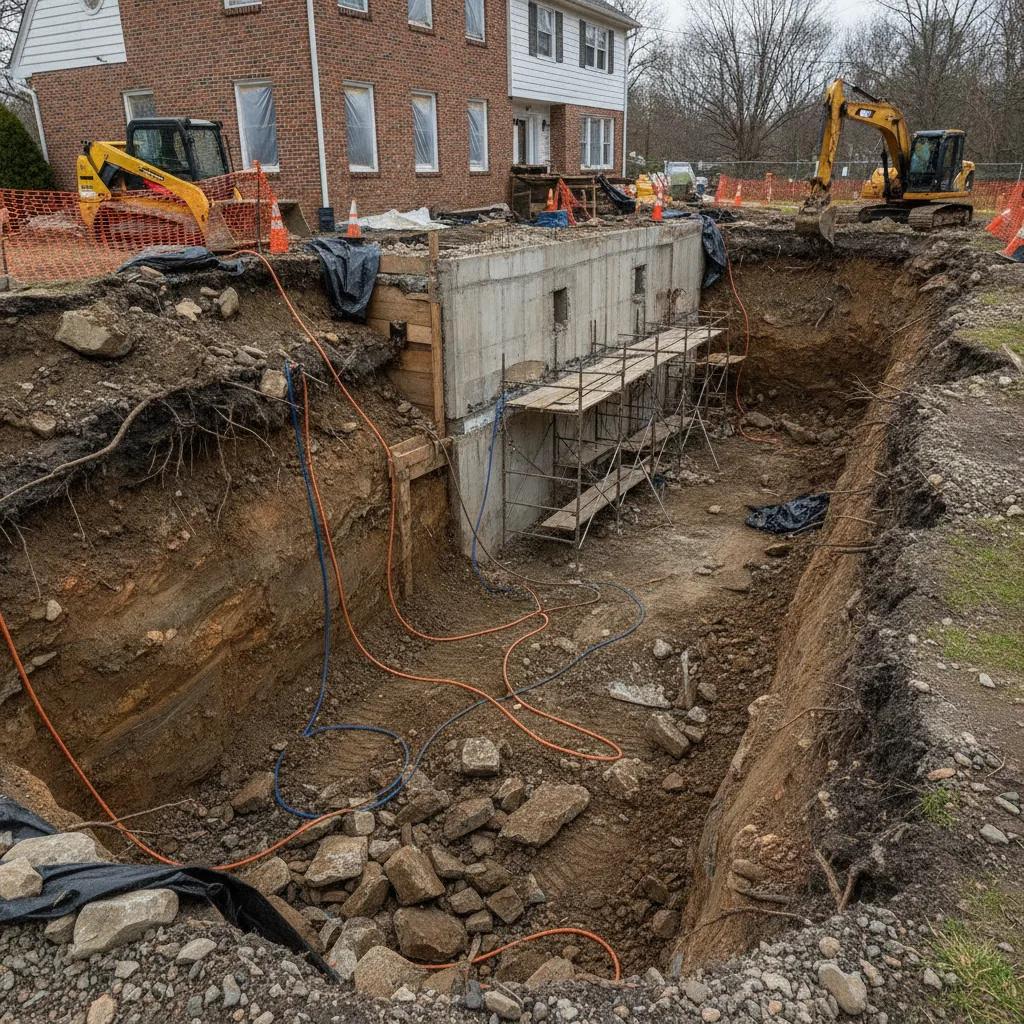
Foundation repair has one of the widest price ranges of any home project. A single crack seal might run a few hundred dollars. A whole-house structural correction can climb into five figures. So when someone asks “what’s the most expensive foundation repair?”, the useful answer isn’t just a dollar figure — it’s understanding which problems land at the top of the scale and, more importantly, how homes get there in the first place.
The good news for most Mesa homeowners: the priciest scenarios are also the least common, and they’re usually the end result of a problem that went unaddressed for years. Catching movement early is the single biggest thing that keeps you out of this category.
The Priciest Repair Scenarios
When a foundation job reaches the expensive end, it’s almost always one of these:
- Full-perimeter underpinning (piering). When a home has settled significantly across a large portion of its footprint, stabilizing it can require installing a system of piers driven deep to reach stable soil or bedrock. The more piers a house needs, and the deeper they have to go, the higher the cost climbs.
- Severe differential settlement correction. When one section of a home has dropped substantially relative to the rest, lifting and re-supporting it involves extensive labor, engineering, and sometimes multiple repair methods working together.
- Foundation replacement. The rarest and most expensive option — actually removing and rebuilding a failed foundation. This is a last resort reserved for structures where the original foundation is beyond stabilizing.
- Extensive stem-wall failure across an entire home. A single spalling section is a targeted repair. A home where corrosion has compromised the stem wall around most of the perimeter becomes a much larger project.
These are the jobs that make foundation repair sound frightening. They’re real, but they’re the exception — not the norm for a typical crack or a single settled corner.
Why These Cost So Much
The expensive repairs share a few cost drivers that explain the price tag:
- Scope. Cost scales with how much of the structure is involved. A problem confined to one corner is a fraction of the price of one spanning the whole footprint.
- Depth and access. Piering requires reaching stable soil, which can be deep in Arizona’s variable ground. Deeper work and harder access mean more labor and equipment.
- Engineering. Major structural corrections require design and oversight, and that professional involvement is part of the cost — and part of what protects you.
- Compounding damage. By the time a foundation reaches the expensive tier, the movement has usually caused secondary damage — plumbing, framing, finishes — that adds to the total.
Notice the pattern: nearly every driver gets worse with time. A problem that’s small and localized today can, if ignored, become the large-scope, deep-access, heavily-damaged job that lands at the top of the price scale. For a fuller picture of where different repairs fall, our foundation repair cost page breaks down the ranges.
How to Avoid the Worst Case
Here’s the part that actually helps you. The most expensive foundation repairs are rarely a matter of bad luck — they’re usually a matter of timing. A few habits keep the vast majority of Mesa homes out of that category:
- Address movement early. The single biggest cost multiplier is time. A stem-wall repair caught at the first sign of spalling is a targeted fix; the same wall ignored for five years can become a perimeter-wide project.
- Manage soil moisture and drainage. Because Arizona’s expansive clay and caliche drive so much foundation movement, keeping water draining away from the home and soil moisture consistent prevents a lot of the swing that causes damage in the first place.
- Get an honest diagnosis, not a franchise upsell. This is the one most people miss. Some of the “most expensive” quotes homeowners receive aren’t expensive because the house needs it — they’re expensive because a commissioned closer defaulted to the biggest system on the menu. A right-sized diagnosis often reveals that a targeted repair solves the actual problem for a fraction of the quoted number.
That last point is worth sitting with. The genuinely most expensive repairs are real and sometimes unavoidable. But a meaningful share of the eye-watering quotes homeowners get are avoidable — either by catching the problem earlier or by getting a straight second opinion on the scope.
Get Your Foundation Looked At
A quick inspection tells you what is really going on beneath the surface — and we will send a written estimate.
→ Request a Written EstimateIf you’ve been handed a large foundation quote and it doesn’t sit right, don’t just accept it and don’t just walk away. Get another set of eyes on it. Request a written estimate and we’ll tell you plainly what your home actually needs — whether that’s a modest targeted repair or, in the rare case, confirmation that a larger job really is warranted.
Frequently Asked Questions
What is the most expensive type of foundation repair?
Full-perimeter underpinning (piering) and complete foundation replacement sit at the top of the price scale, followed by severe differential settlement correction and home-wide stem-wall failure. These jobs are expensive because they involve the whole structure, deep or difficult access, engineering oversight, and usually years of compounding secondary damage.
Why are some foundation repair quotes so high?
Two reasons. Genuinely large-scope problems — whole-home settlement or foundation replacement — cost a lot because of scope, depth, and engineering. But some high quotes come from franchises defaulting to their biggest pier system when a targeted repair would solve the actual problem. An honest, right-sized diagnosis often lowers the number dramatically.
How can I avoid needing an expensive foundation repair?
Time is the biggest cost driver, so address movement early — a problem caught at the first sign is a fraction of the cost once it spreads. Manage drainage and soil moisture to reduce the swing that causes damage, and get an honest diagnosis rather than accepting the first large quote.
Is foundation replacement ever really necessary?
Rarely. Full replacement is a last resort reserved for foundations that are truly beyond stabilizing. The vast majority of foundation problems — even significant ones — can be corrected with targeted repairs or underpinning. If you’re told you need a full replacement, it’s worth getting an independent assessment to confirm.