
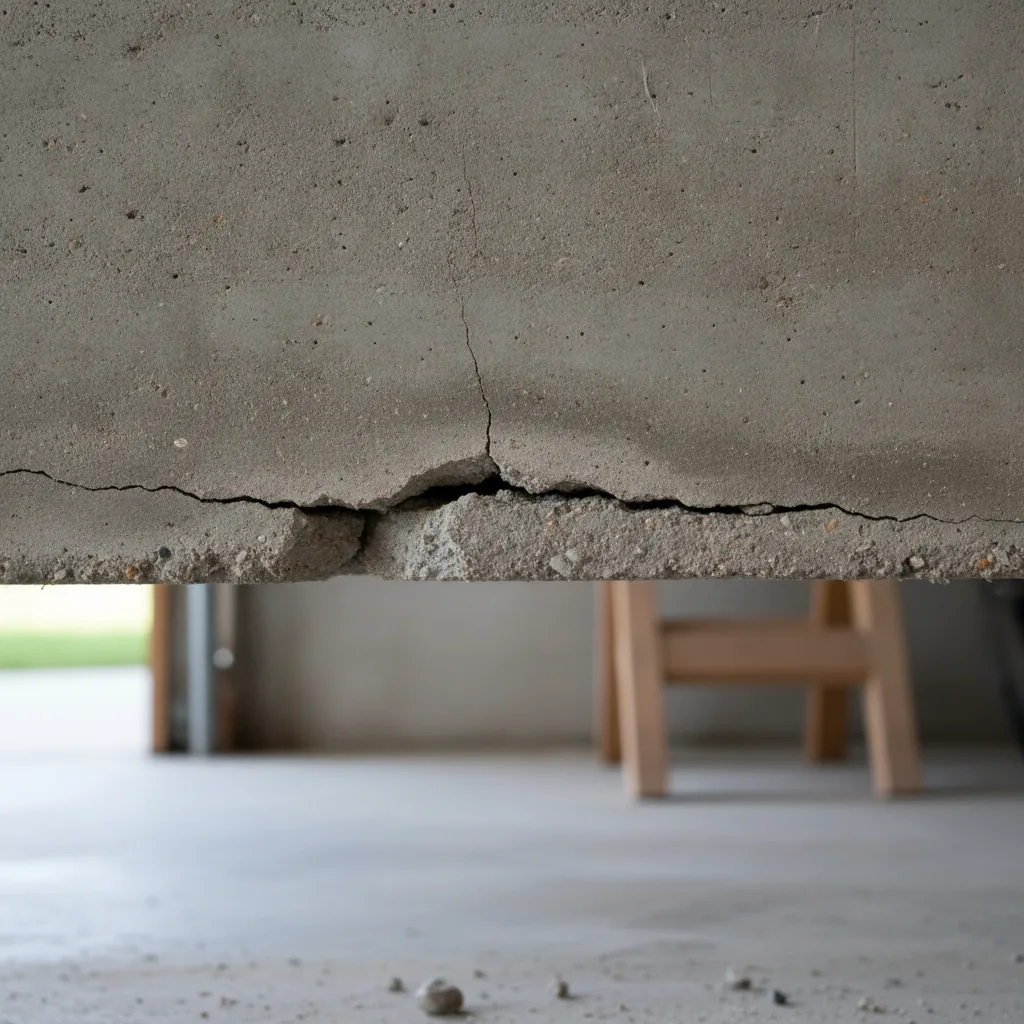
You were moving a bookshelf or pulling weeds along the side yard, and there it was — a crack you’re pretty sure wasn’t there before. Now your mind is running to the worst case, and you’re wondering if the whole house is in trouble. Here’s the reassuring truth up front: most foundation cracks in Mesa homes are cosmetic, not structural. Concrete cracks. It’s what it does. The real question isn’t “is there a crack” — it’s “what kind of crack is it.”
Let’s walk through how to read one, because the type, width, direction, and pattern tell you almost everything you need to know before anyone comes out to look.
Are Foundation Cracks Serious? It Depends on the Type
A crack becomes a concern based on a few readable clues: which direction it runs, how wide it is, whether the two sides have shifted out of plane, and whether it’s getting worse over time. A thin vertical line that hasn’t changed in years is a very different animal than a widening horizontal crack with one side pushed inward.
Here in the East Valley, our expansive clay and caliche soils swell and shrink with every monsoon-and-drought cycle, so some seasonal movement — and the hairline cracking that comes with it — is normal. That soil context is exactly why a crack that would alarm someone in a stable-soil state is often routine here. The skill is telling routine apart from genuine movement.
Cracks That Are Usually Cosmetic
These are the cracks that make up the large majority of what worried homeowners call us about — and most of them don’t need structural repair:
- Hairline cracks — thinner than about 1/16 inch, often in stucco or drywall. Frequently just shrinkage as concrete or plaster cured.
- Thin vertical cracks that run straight up and down. These usually come from normal curing and minor settlement and are the least concerning direction a crack can take.
- Spider-web or map cracking on a slab or stucco surface — surface-level shrinkage, not structural.
- Small drywall cracks at the corners of doors and windows. Houses move a little with temperature and seasons, and drywall is the first thing to show it.
The common thread: they’re thin, they run vertically or randomly, the two sides sit flush, and they aren’t growing. A cosmetic crack can still be worth sealing to keep moisture out, but it isn’t a sign your foundation is failing.
Cracks That Signal Structural Problems
These are the ones worth taking seriously and having looked at:
- Horizontal cracks — a crack running sideways across a foundation wall or stem wall is the most concerning direction, because it often means soil pressure or movement pushing against the wall.
- Stair-step cracks in block or brick — cracks that climb the mortar joints in a staircase pattern, especially near doors and windows, point to differential settlement, meaning one part of the home is moving relative to another.
- Wide diagonal cracks radiating from the corners of openings, particularly wider than a quarter inch.
- Cracks with displacement — where one side of the crack sticks out farther than the other, or you can slide a coin into the gap. Displacement means the concrete has actually moved, not just split.
- Cracks paired with other symptoms — doors that suddenly won’t latch, sloping floors, gaps opening at the baseboard or ceiling. One crack alone may be nothing; a crack plus these signs is a pattern.
If what you’re seeing lands in this list, that’s not a reason to panic — it’s a reason to get a proper diagnosis rather than guess. A structural crack can usually be repaired effectively when it’s caught and the underlying movement is addressed.
How Wide Is Too Wide?
Width is the single most useful measurement a homeowner can take, and you don’t need special tools — a ruler or even a credit card edge works. As a general rule of thumb:
Get Your Foundation Looked At
A quick inspection tells you what is really going on beneath the surface — and we will send a written estimate.
→ Request a Written Estimate- Under 1/16 inch (hairline): almost always cosmetic. Keep an eye on it.
- 1/16 to 1/4 inch: worth monitoring. Mark the ends with a pencil and date it, and watch whether it grows over a few months.
- Wider than 1/4 inch: worth a professional look, especially if it’s horizontal, has displacement, or is still opening.
Width alone doesn’t tell the whole story — a 1/8-inch horizontal crack with displacement matters more than a 3/8-inch vertical shrinkage crack — but combined with direction and movement, it gives you a solid read. The most important factor of all is change: a crack that’s stable is far less concerning than one that’s actively widening.
When to Call a Professional
You can comfortably monitor a thin, stable, vertical crack yourself. It’s time to have someone take a look when you see any of these:
- A horizontal crack in a foundation or stem wall.
- A crack wider than a quarter inch, or one with visible displacement.
- A crack that’s actively growing — you marked it and it moved.
- Cracks combined with sticking doors, sloping floors, or gaps at the trim.
- Any exposed, rusting rebar in a spalling stem wall, common in older Mesa homes.
A good foundation inspection gives you a plain answer: cosmetic or structural, and if structural, what the right-sized fix is. And if it’s nothing, an honest contractor will tell you that too — no scare tactics, no pressure to fix a crack that doesn’t need it. If you’d rather stop wondering, reach out for a written estimate and get a straight read on what your house is actually doing.
Frequently Asked Questions
How big is too big for a foundation crack?
As a rough guide, cracks under 1/16 inch are almost always cosmetic, 1/16 to 1/4 inch are worth monitoring, and cracks wider than 1/4 inch deserve a professional look — especially if they run horizontally or one side has shifted out of plane. Width matters, but direction and whether the crack is still growing matter just as much.
What does a concerning foundation crack look like?
The cracks that warrant attention are horizontal cracks across a foundation or stem wall, stair-step cracks climbing the mortar joints in block, wide diagonal cracks from the corners of doors and windows, and any crack where one side is pushed out past the other. Cracks paired with sticking doors or sloping floors are also worth investigating.
Is it normal for a concrete foundation to crack?
Yes. Concrete shrinks as it cures and moves with seasonal soil changes, so thin cracks are extremely common — especially in Mesa, where expansive clay and caliche soils swell and shrink with the monsoon-and-drought cycle. Most of these are cosmetic. It’s the type and pattern, not the mere presence of a crack, that determines whether it’s serious.
Should I worry about a hairline crack in my foundation?
Generally no. A hairline crack — thinner than about 1/16 inch — that runs vertically and isn’t growing is almost always cosmetic. Mark its ends with a pencil, note the date, and check it over a few months. If it stays put, it’s just your house doing what concrete does. If it widens or changes direction, have it looked at.