
If you’ve never had one, “foundation inspection” can sound vague — like someone glances at a crack, sucks their teeth, and hands you a scary number. A real inspection is nothing like that. It’s a methodical process with measurable outputs, and when it’s done right, you should come away understanding your home better than you did before, whether or not you need any work.
Here’s exactly what a thorough foundation inspection includes, so you know what to expect and can tell a real assessment from a sales call in disguise.
What the Inspector Actually Checks
A good inspection starts with a systematic look at the whole structure, inside and out. The inspector isn’t hunting for a reason to sell you something — they’re reading the house for the signs of how it’s actually moving. That means checking:
- The exterior walls and stem wall. Walking the perimeter to look for stair-step cracks in block or stucco, separation, and — on Mesa’s many stem-wall homes — spalling concrete or rusting rebar at the base of the walls.
- Interior walls and ceilings. Looking for cracks near doors and windows, gaps where walls meet ceilings, nail pops, and trim pulling away.
- Doors and windows. Testing whether they operate cleanly or stick and rack, which reveals whether the framing has gone out of square.
- Floors. Checking for slope, cracked tile running in a line, and areas that feel uneven underfoot.
- Drainage and grading. Looking at how water moves around the home — where downspouts discharge, whether the ground slopes away, and whether water pools against the foundation. In Arizona, this is central, because soil moisture drives most foundation movement here.
Part of what a skilled inspector brings is context: knowing which of these signs matter on Arizona soil and how they fit together. A single hairline crack means one thing; that same crack alongside a sticking door and a spalling stem wall means another.
A thorough visual assessment usually takes a while — this isn’t a five-minute drive-by. The inspector works the perimeter, moves room to room inside, and often asks you questions along the way: when you first noticed the crack, whether the door has always stuck, what the drainage does in a hard monsoon storm. That back-and-forth matters, because you live in the house and you’ve watched it change over time. Your observations, combined with what the inspector measures, produce a far better diagnosis than either would alone.
Elevation and Crack Measurements
This is what separates a real inspection from a guess. Beyond looking, a thorough inspection measures.
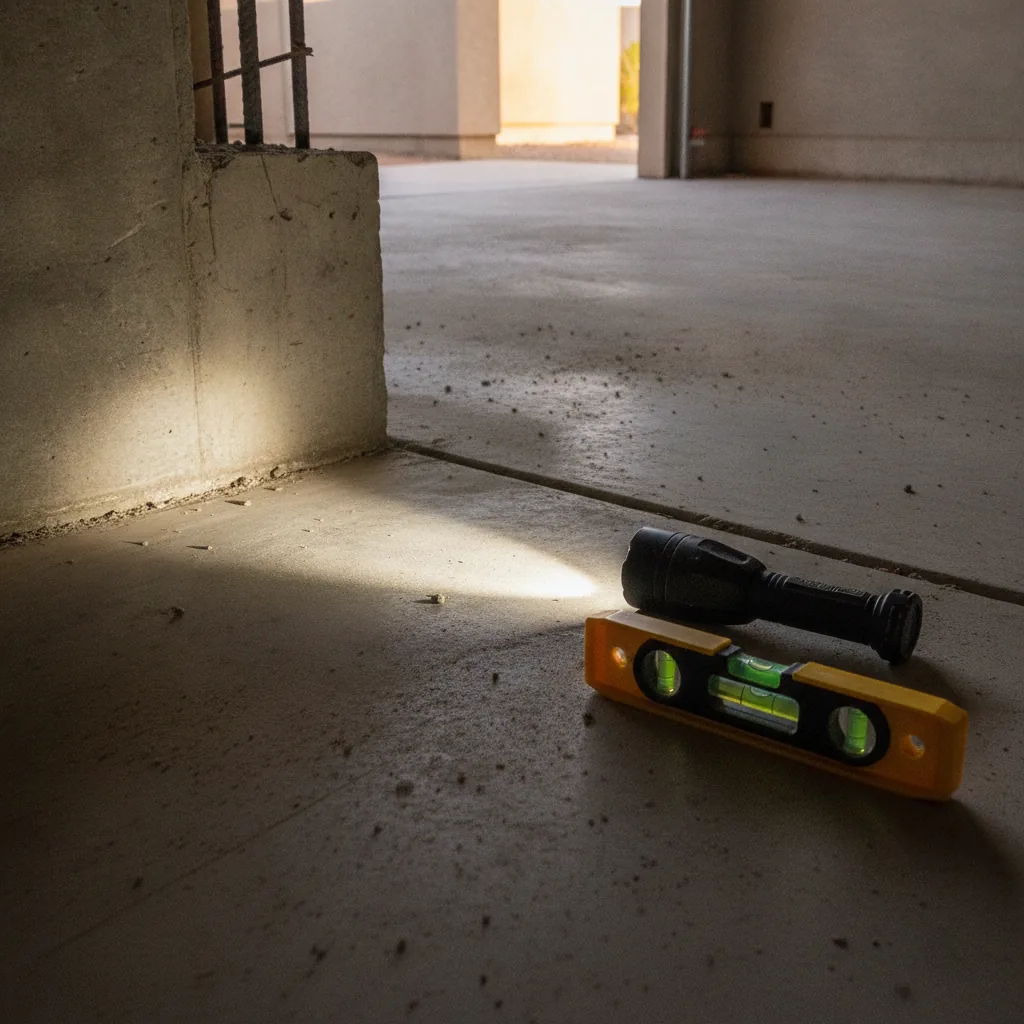
Elevation readings. Using a level or elevation-measuring tool, the inspector takes readings across the floor to map how much the slab varies from one point to another. This turns “the floor feels off” into actual numbers — a documented picture of where the home is high, where it’s low, and how much differential movement has occurred. Those measurements are the backbone of an honest diagnosis, because they show the pattern of movement rather than relying on impression.
Crack measurements. The width, length, direction, and location of significant cracks get documented. Width matters (hairline versus wider than a quarter inch), and so does direction — vertical, diagonal, horizontal, or stair-step each mean different things. Recording them also creates a baseline, so if you monitor rather than repair, you can tell later whether anything actually changed.
Together, the elevation map and the crack documentation let an inspector distinguish cosmetic surface cracking from genuine structural movement — which is the entire point of the exercise.
In Arizona specifically, these measurements do something else valuable: they help separate normal settlement from active movement. Almost every older Mesa home has settled some over its life, and a little variation across a slab is expected. What matters is the pattern — whether the low spots and the cracks line up into a story of a corner dropping or a section heaving, and whether that story is still in progress. A skilled inspector reads the numbers against what they know about our expansive clay and caliche, not against a one-size-fits-all rulebook written for a different part of the country.
The Written Report and Estimate
You should walk away from an inspection with something in writing, not just a verbal number and a business card. A proper report lays out:
- What was found — the observations, the measurements, and what they indicate about how the home is moving.
- Whether it’s cosmetic or structural — a plain-language read on how serious it actually is.
- The recommended repair, if any — the right-sized scope for the actual problem, spelled out so you understand it.
- A written estimate — clear numbers for the recommended work, before anyone digs.
That documentation matters for more than peace of mind. If you’re buying or selling, it’s evidence. If you’re deciding whether to act now or monitor, it’s your baseline. And if you get a second opinion, it’s something concrete to compare. A real report puts everything on paper where you can study it, not pressure you into a same-day decision. You can see how we handle the whole assessment on our foundation inspection page.
Get Your Foundation Looked At
A quick inspection tells you what is really going on beneath the surface — and we will send a written estimate.
→ Request a Written EstimateWhy an Honest Paid Estimate Beats a ‘Free Inspection’
Now the part most companies won’t say out loud. The foundation industry is full of “free inspections,” and it’s worth understanding what that phrase often really means.
A free inspection frequently isn’t an inspection — it’s a sales appointment. When the person assessing your home is a commissioned closer whose job is to sell the biggest system on the menu, the incentives are backwards. The “free” look becomes a funnel toward a five-figure quote, sometimes with a same-day discount to pressure a decision. The inspection was free because the real product was the sale.
An honest, paid estimate flips those incentives. When you’re paying for a genuine assessment, you’re buying an expert’s real diagnosis — including the perfectly good outcome of “this is cosmetic, here’s what to watch, you don’t need us right now.” A company that will tell you that is worth more than one that inspects for free and always seems to find a major problem.
This is the heart of how we work. We diagnose the real problem, we measure it, we put a right-sized fix in writing, and often that fix is a targeted crack, stem-wall, or carbon-fiber repair — not an upsell. If your home doesn’t need work, we’ll tell you that plainly, and you’ll have the documentation to prove it.
Considering an inspection because something’s been nagging at you? Request a written estimate and get a methodical, measured, no-pressure read on what your foundation is actually doing.
Frequently Asked Questions
What does a foundation inspection actually include?
A thorough inspection includes a systematic visual check of exterior and interior walls, the stem wall, doors, windows, and floors; elevation readings that map how much the slab varies across the home; measurement and documentation of significant cracks; and a review of drainage and grading. It ends with a written report and, if work is needed, a written estimate.
How does an inspector tell if a crack is structural or cosmetic?
By combining measurement with context. Elevation readings show the pattern of movement across the slab, while crack documentation records width, direction, and location. A wide, stair-step, or horizontal crack alongside measurable differential movement points to structural issues; isolated hairline cracks with no elevation change are usually cosmetic. Measuring is what turns impression into a reliable diagnosis.
Should I get a written report from a foundation inspection?
Yes. You should walk away with a written report covering what was found, whether it’s cosmetic or structural, the recommended right-sized repair if any, and a clear written estimate. That documentation is your baseline for monitoring, your evidence if you’re buying or selling, and something concrete to compare against a second opinion.
Why do you charge for an estimate when others offer free inspections?
A ‘free inspection’ is often a sales appointment run by a commissioned closer whose incentive is to sell the biggest system on the menu. Paying for a genuine assessment flips those incentives — you’re buying an honest diagnosis, including the valid outcome of ‘this is cosmetic, you don’t need work right now.’ A real, right-sized estimate is worth more than a free look that always finds a major problem.