
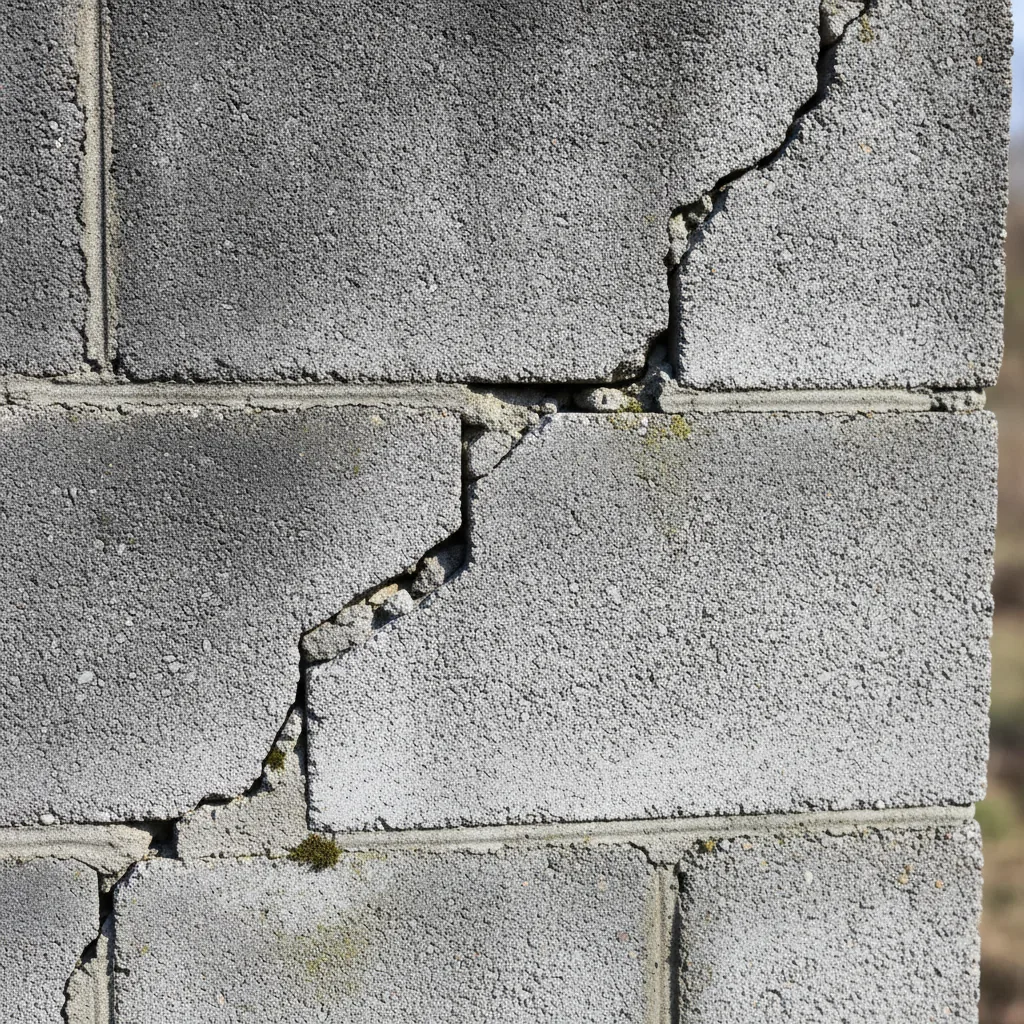
When you’re standing in front of a crack trying to figure out how worried to be, the most useful thing you can do is identify what kind of crack it is. Foundation cracks aren’t all the same — their direction, width, and location each tell a different story about what the ground under your Mesa home is doing. This is a plain-English field guide to the seven you’re most likely to see, roughly ordered from least to most concerning.
7 Types of Foundation Cracks & What They Mean
Before we go one by one, three quick rules of thumb that apply to all of them. Direction tells you the likely cause. Width tells you how much movement happened. And whether it’s growing tells you if the problem is still active. Keep those three in mind as you read.
1. Vertical Cracks
Running straight up and down, or close to it. These are the most common and generally the least concerning type. Most vertical cracks come from concrete shrinkage as the foundation cured, or from minor, even settlement early in the home’s life.
What it means: usually routine. A thin vertical crack that isn’t growing is typically cosmetic. Keep an eye on the width; if it opens past about a quarter inch or starts leaking water, have it sealed.
2. Diagonal Cracks
Running at an angle, often somewhere between 30 and 75 degrees, and frequently radiating from the corner of a door or window. These usually come from differential settlement — one part of the foundation dropping more than another, so the concrete cracks along the line of stress.
What it means: worth watching. A thin diagonal crack may be old, stabilized settlement. A wide one (past a quarter inch), or one that’s still growing, points to active movement worth a professional look.
3. Horizontal Cracks (Most Serious)
Running sideways across a foundation wall or stem wall. This is the type that deserves the most attention. A horizontal crack usually means lateral pressure — expansive soil or water pushing against the wall from the side — rather than simple curing.
What it means: get it inspected. Horizontal cracks, especially with any bowing or inward movement of the wall, signal a structural load problem that won’t fix itself. This is the one crack type where waiting rarely pays off.
4. Stair-Step Cracks in Block
Climbing diagonally through the mortar joints of a block or brick wall in a staircase pattern, often near doors, windows, or corners. Extremely common in Mesa’s block-construction homes and block privacy walls.
What it means: differential settlement, driven by our expansive clay lifting and dropping one section of the footing relative to another. Narrow, stable stair-stepping may just need monitoring and sealing; widening stair-step cracks with displacement point to active settlement that should be diagnosed.
5. Hairline & Shrinkage Cracks
Thin as a hair — under about 1/16 inch — and often appearing as a spider-web or map pattern across a slab or stucco surface. These show up as concrete and plaster cure and shed moisture in the first months and years.
What it means: almost always cosmetic. Shrinkage cracks are the concrete equivalent of a wrinkle. They’re worth sealing to keep water out, but they aren’t a structural warning.
Get Your Foundation Looked At
A quick inspection tells you what is really going on beneath the surface — and we will send a written estimate.
→ Request a Written Estimate6. Settlement Cracks
Not a shape so much as a cause — cracks (often vertical or diagonal) that appear because a portion of the home has sunk into softened or eroded soil. In the East Valley, these frequently trace back to a plumbing leak, a downspout dumping water in one spot, or collapsible soil that lost structure when it got saturated.
What it means: depends on whether the settling is finished or ongoing. If the cause (a leak, bad drainage) is fixed and the crack is stable, it may just need repair. If the soil is still moving, the underlying settlement needs to be stabilized, not just the crack sealed.
7. Wide or Displaced Cracks
Any crack — regardless of direction — that’s wider than about a quarter inch or where the two sides no longer line up (one side pushed out or dropped below the other). Displacement is the tell that the concrete has physically moved.
What it means: take it seriously. Width plus displacement is the clearest sign of real structural movement, and it warrants a written diagnosis before you decide on a repair.
Which Cracks Need a Pro
Here’s the quick sort. You can comfortably monitor thin, vertical, flush, stable cracks and cosmetic shrinkage cracks — mark the ends with a pencil, date them, and re-check a couple times a year. You should get a professional look at:
- Any horizontal crack in a foundation or stem wall.
- Any crack wider than a quarter inch.
- Any crack with displacement — sides out of plane.
- Widening stair-step cracks in block.
- Cracks paired with sticking doors, sloping floors, or trim gaps.
Most cracks in Mesa homes fall on the cosmetic side of that line, and a good contractor will tell you when that’s the case instead of talking you into a repair. When a crack does land in the second list, catching it early usually means a smaller, cheaper crack repair rather than a major one later. If you want a plain read on which type you’re looking at, reach out for a written estimate and we’ll tell you straight.
Frequently Asked Questions
Which type of foundation crack is the most serious?
Horizontal cracks are the most concerning. A crack running sideways across a foundation or stem wall usually signals lateral pressure from expansive soil or water pushing against the wall, and it often comes with bowing. Unlike vertical shrinkage cracks, horizontal cracks rarely resolve on their own and should be inspected.
What do stair-step cracks in my block wall mean?
Stair-step cracks climbing the mortar joints of block or brick indicate differential settlement — one section of the footing moving relative to another. In Mesa this is usually driven by expansive clay lifting and dropping the soil. Narrow, stable stair-stepping can be monitored and sealed; widening cracks with displacement point to active settlement worth diagnosing.
Are hairline cracks in a foundation a problem?
Rarely. Hairline and spider-web shrinkage cracks form as concrete and stucco cure and shed moisture, and they’re almost always cosmetic. They’re worth sealing to keep water and pests out, but they don’t signal structural trouble unless they widen substantially or show displacement over time.
How can I tell which type of crack I have?
Look at three things: direction (vertical is usually routine, horizontal is most serious, stair-step means settlement), width (hairline is cosmetic, wider than a quarter inch warrants a look), and whether the two sides line up (displacement means the concrete moved). Mark the ends with a pencil and date them to see whether it’s still growing.