
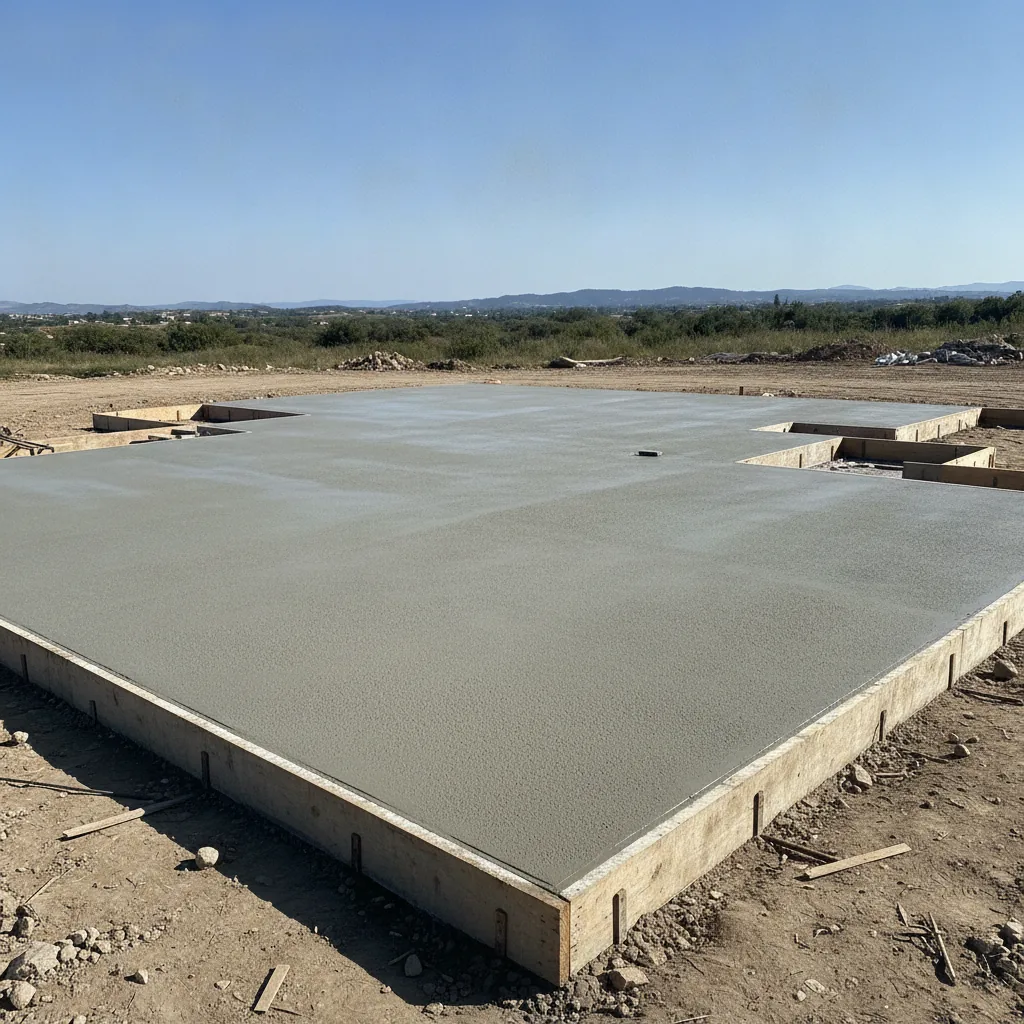
A concrete slab foundation is built to outlast almost everything else in your house. Under normal conditions, a well-built slab can last 50 to 100 years or more — often longer than the roof, the plumbing, the HVAC, and several owners will. So if you’re wondering whether your Mesa home’s foundation is on borrowed time, the baseline answer is reassuring: concrete is remarkably durable.
But “how long does it last?” is really two questions. There’s the theoretical lifespan of the concrete itself, and there’s the practical lifespan of your slab on your soil with your maintenance. In Arizona, that second number is the one that matters, because our ground does more to determine a foundation’s life than the calendar does.
Typical Lifespan and What Affects It
The concrete in a slab foundation doesn’t really “wear out” the way a mechanical part does. Left undisturbed on stable ground, it can last generations. What shortens a slab’s usable life isn’t the concrete aging — it’s the conditions around it. The big factors:
- The soil it sits on. A slab on stable, well-drained soil can last a century. A slab on active, moving soil is under constant stress no matter how good the concrete is. This is the dominant factor.
- Build quality. Proper soil preparation, correct concrete mix, adequate reinforcement, and good drainage designed in from the start all extend a foundation’s life.
- Water management. How well water is kept away from and moisture kept consistent around the slab over the decades makes an enormous difference.
- Maintenance. Foundations that get attention — drainage kept working, small issues addressed early — outlive foundations that get ignored until something fails.
In other words, two identical slabs poured the same day can have very different lifespans depending entirely on the ground and the care they get.
How Arizona Soil Shortens It
Here’s where our region changes the math. Much of Mesa sits on expansive clay and caliche — soils that swell when wet and shrink when dry, and do it more dramatically than the soil in most of the country. Every wet-dry cycle flexes the ground under the slab, lifting it in some spots and pulling support out from under it in others.
A slab is strong, but it’s designed to sit on stable support, not to bridge shifting ground indefinitely. Decades of that swelling and shrinking — accelerated by Arizona’s swing from bone-dry to monsoon-soaked and back every year — puts stress on the concrete that a slab on stable soil never experiences. That’s why foundation issues show up here on homes that would have gone their whole lives untouched in a milder climate.
The important nuance: this doesn’t mean Arizona slabs are doomed to fail early. It means their real-world lifespan depends heavily on how the soil moisture is managed. Homes with consistent moisture and good drainage can and do reach their full expected lifespan here. Homes where the soil swings hard and water pools against the foundation are the ones that age prematurely.
Signs Your Slab Is Aging
A slab rarely fails suddenly. It gives you signals as stress accumulates, and most of them are the same symptoms of soil movement in general:
- Cracks that widen over time — especially those wider than about a quarter inch, or ones that grow season to season.
- Floors that have developed a slope, or tile and grout that cracks in a line across a room.
- Doors and windows that have started sticking or no longer latch the way they used to.
- Gaps opening where walls meet ceilings or where trim pulls away from the wall.
- Separation at the slab edge or, on stem-wall homes, flaking concrete at the base of exterior walls.
One of these in isolation is often cosmetic. A cluster of them, or any that are clearly progressing, is worth having looked at — not because your foundation is failing, but because catching movement early is what keeps a small, targeted repair from becoming a large one.
Get Your Foundation Looked At
A quick inspection tells you what is really going on beneath the surface — and we will send a written estimate.
→ Request a Written EstimateExtending Your Foundation’s Life
The good news is that the biggest factors in an Arizona slab’s lifespan are the ones you can influence. To get the full life out of your foundation:
- Keep soil moisture consistent around the home through the dry months, so the clay doesn’t swing between extremes.
- Keep water draining away from the foundation — check your grading, extend downspouts, and fix pooling after storms.
- Address movement early. A small crack repair or slab leveling done now protects the slab from the compounding stress that shortens its life.
These are the same habits that prevent cracks in the first place, and they’re what separates a slab that reaches 80-plus years from one that needs major work at 30. If your slab is showing signs of movement, addressing it isn’t a sign the foundation is done — it’s how you extend it. Our slab foundation repair page explains how we correct movement while protecting the slab you already have.
Not sure whether the signs you’re seeing are normal aging or something worth fixing? Request a written estimate and we’ll give you a straight read on where your slab actually stands — and what, if anything, it needs.
Frequently Asked Questions
How long does a concrete slab foundation last?
Under normal conditions, a well-built concrete slab foundation can last 50 to 100 years or more — often longer than the roof, plumbing, or HVAC. The concrete itself is extremely durable; what limits real-world lifespan is the soil it sits on, the quality of the build, and how well water and moisture are managed over the decades.
Does Arizona soil shorten a foundation’s lifespan?
It can, if the soil isn’t managed. Expansive clay and caliche swell and shrink with moisture more dramatically here than in most regions, stressing a slab in ways that stable soil never would. But homes with consistent soil moisture and good drainage often still reach their full expected lifespan — the outcome depends heavily on water management.
What are the signs a slab foundation is aging or failing?
Watch for cracks that widen over time (especially wider than about a quarter inch), floors developing a slope, tile cracking in a line, doors and windows sticking, and gaps opening at trim or ceilings. One sign alone is often cosmetic; a cluster of them, or any clearly progressing, is worth a professional inspection.
Can I extend the life of my foundation?
Yes, and the biggest factors are within your control. Keep soil moisture consistent through the dry months, keep water draining away from the foundation, and address any movement early with a targeted repair. These habits are what separate a slab that reaches 80-plus years from one that needs major work decades sooner.