
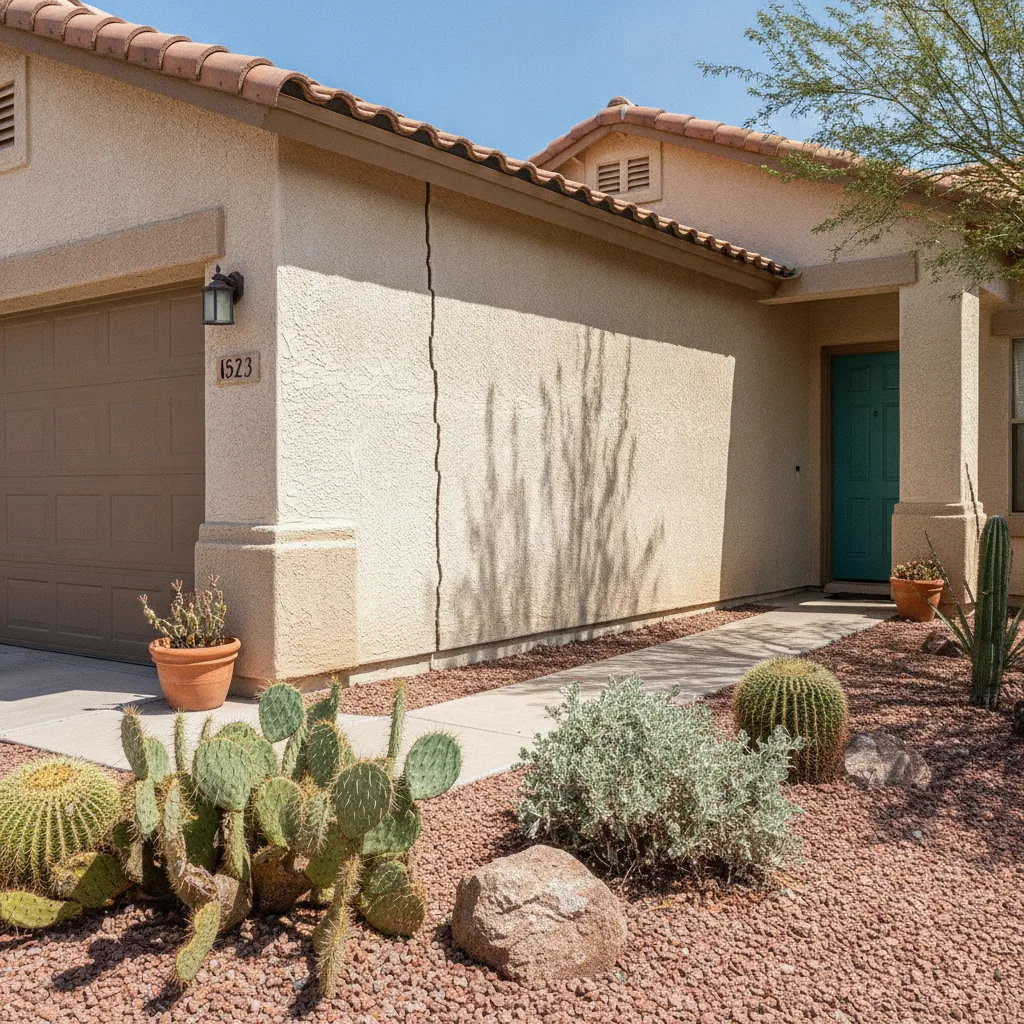
It is one of the first questions a homeowner asks once they realize a foundation repair might be coming: will my insurance pay for this? The honest answer is that it depends entirely on what caused the damage — and for a lot of Arizona foundation problems, the cause is exactly the kind that standard policies exclude. But not always. Understanding the distinction is the difference between a wasted claim and a real shot at coverage.
This is a general guide, not legal or insurance advice. Your specific policy is the final word, so read it, and when in doubt, ask your agent to point to the exact language.
Does Homeowners Insurance Cover Foundation Repair in Arizona?
The short version: a standard Arizona homeowners policy will usually cover foundation damage caused by a sudden, accidental event that the policy names as a covered peril — and will usually exclude foundation damage caused by gradual earth movement, settling, or poor maintenance. Since a large share of Arizona foundation trouble comes from expansive soil moving over time, much of it falls into the excluded category. But damage from a sudden covered event, like a burst pipe eroding the soil under a slab, is a different story.
So the real question is never simply “is foundation repair covered?” It is “what caused this particular damage, and is that cause a covered peril?”
What’s Usually Covered vs. Excluded
Insurance policies are built around named perils — specific causes the policy agrees to pay for — and a list of exclusions. For foundations, it tends to break down like this.
Often covered (when the policy lists these perils and they caused the foundation damage):
- A sudden plumbing failure — a pipe bursts and the escaping water erodes or saturates the soil under the foundation, causing it to move.
- Certain sudden, accidental water discharge from an appliance or system, again as a covered peril.
- Damage from specific named events your policy covers, such as certain types of accidental damage or, in some policies, particular weather events.
Commonly excluded:
- Earth movement — settling, shifting, expanding, and contracting of soil. This is the big one in Arizona, and it is the standard exclusion that catches most expansive-soil foundation claims.
- Gradual damage — anything that happened slowly over months or years rather than in a sudden event.
- Poor maintenance or wear and tear — damage the insurer considers preventable, like a long-ignored leak or drainage problem.
- Construction or design defects — problems traced to how the home was originally built.
The theme is clear: insurers pay for the sudden and accidental, not the gradual and expected.
Why ‘Earth Movement’ Often Isn’t Covered
Here is the frustrating reality for Arizona homeowners. Our most common foundation problems — expansive clay swelling and shrinking, soil settling, the slow damage from monsoon-drought cycles — are exactly the kind of gradual earth movement that standard policies exclude. Insurers treat soil movement as a foreseeable condition of owning property on that soil, not an accident, so they carve it out of the base policy almost universally.
That is why so many homeowners are surprised, and sometimes upset, when a claim for cracks caused by settling gets denied. The denial is not necessarily the insurer being difficult; it is often the earth-movement exclusion doing exactly what it was written to do.
There is a nuance worth knowing, though: the cause matters more than the symptom. If gradual soil movement cracked your foundation, that is excluded. But if a sudden covered event — a burst supply line washing out the soil under a footing — caused the same-looking crack, the origin can flip it into covered territory. Two identical cracks can have opposite outcomes depending on what caused them, which is why documenting the cause is everything.
Get Your Foundation Looked At
A quick inspection tells you what is really going on beneath the surface — and we will send a written estimate.
→ Request a Written EstimateHow to Document and File a Claim
If you think your foundation damage might trace back to a covered cause, how you handle the claim from the start matters. A few principles:
- Read your policy first. Find the covered-perils list and the exclusions. Know whether you have any endorsements or riders before you call.
- Establish and document the cause. This is the whole ballgame. If a pipe burst, document the burst, when it happened, and the water damage — because that sudden event is what makes the claim potentially payable, not the crack itself.
- Photograph everything — the damage, the source, and the timeline. Date-stamped photos are powerful evidence.
- Report promptly. Sudden-event coverage often hinges on timely reporting; a long delay can undermine an otherwise valid claim.
- Get an independent professional assessment. A written evaluation of what actually caused the damage carries real weight, especially if it identifies a sudden, covered origin. The insurer will send their own adjuster, and having your own documentation levels the field.
- Keep records of every conversation with the insurer — names, dates, and what was said.
The homeowners who succeed with foundation claims are almost always the ones who can clearly show a sudden, covered cause and who documented it thoroughly and early.
What to Do If Your Claim Is Denied
A denial is not always the end of the road. If your claim is denied and you believe the damage came from a covered cause:
- Get the denial in writing and read the specific reason and the policy language they cite.
- Review whether the stated reason actually fits your situation. If they cited earth movement but your damage came from a burst pipe, that is worth challenging with evidence.
- Get an independent engineer or specialist’s report establishing the true cause. This is often the single most effective tool in an appeal.
- Consider a licensed public adjuster who works on the homeowner’s behalf, particularly for a larger claim.
- File a formal appeal with your documentation, and know that Arizona homeowners can escalate disputes to the state’s insurance regulator if needed.
Whatever the coverage outcome, the repair itself still needs to be done right and priced honestly. Our job is the structural side — diagnosing the real cause (which also helps your documentation) and quoting the right-sized fix in writing. You can find more common questions answered on our FAQ page. And if you need an honest, written assessment of what actually caused your foundation damage — the kind of documentation an insurance claim lives or dies on — get a written estimate. Mesa Foundation Repair Co. is your own local Mesa foundation crew.
Frequently Asked Questions
Why did my insurance deny my foundation claim in Arizona?
Most likely because of the earth-movement exclusion. Standard policies exclude damage from soil settling, shifting, and expanding, which describes most Arizona foundation problems caused by expansive clay. Insurers treat gradual soil movement as a foreseeable condition rather than a sudden accident, so those claims are commonly denied.
When would insurance actually cover foundation repair?
Typically when the damage was caused by a sudden, accidental event the policy names as a covered peril, such as a burst pipe that eroded or saturated the soil under the foundation. The cause matters more than the crack itself: two identical cracks can have opposite outcomes depending on whether the origin was sudden and covered or gradual and excluded.
What should I document for a foundation insurance claim?
Focus on proving the cause. Document the triggering event, such as a burst pipe, with dated photos and a timeline, photograph all the damage and its source, report promptly, and get an independent professional assessment of what actually caused the damage. Establishing a sudden, covered cause is the key to a payable claim.
Can I appeal a denied foundation repair claim?
Yes. Get the denial and its stated reason in writing, review whether that reason truly fits your situation, and gather an independent engineer’s report establishing the real cause. A public adjuster can help on larger claims, and Arizona homeowners can escalate disputes to the state insurance regulator if an appeal stalls.