
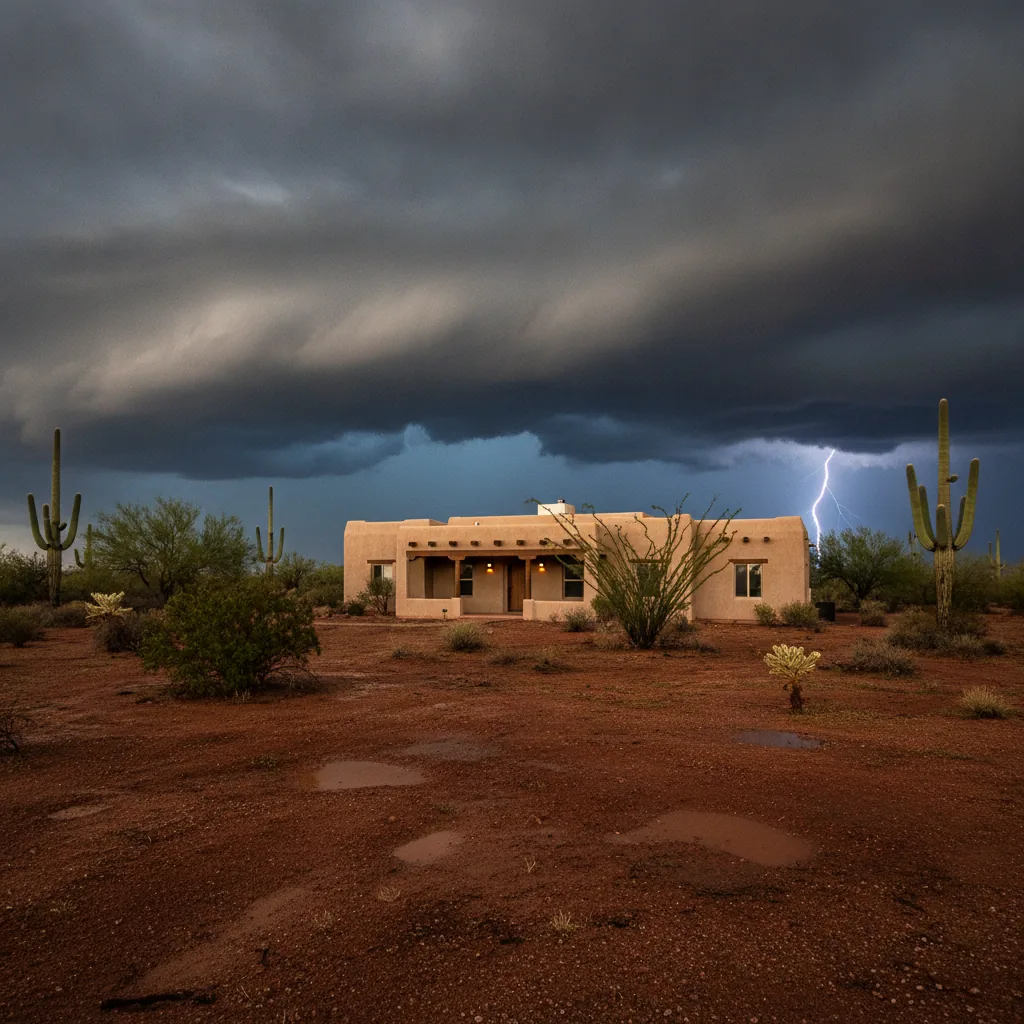
Ask any Mesa homeowner what season is hardest on their house and they will probably say July, when it is 112 degrees. But for your foundation, the real stress test is the monsoon. Months of dry heat pull every bit of moisture out of the ground, then a single storm drops an inch of rain in an afternoon onto soil that cannot soak it up fast enough. That back-and-forth is the engine behind most of the foundation movement we see in the East Valley.
The good news is that none of this is mysterious, and most of it is manageable. Once you understand what the soil is doing, you can usually stay ahead of the damage instead of chasing it. Here is the plain version.
How Monsoon Season Stresses Mesa Foundations
Much of the Valley sits on expansive soil — clay-heavy ground that behaves almost like a sponge. When it is dry, it shrinks and pulls back from whatever sits on top of it. When it gets wet, it swells and pushes upward. A foundation resting on that soil is only as stable as the ground holding it, and in Mesa the ground does not hold still.
During the dry months of spring and early summer, the soil around and under your slab loses moisture and contracts. Gaps open up. Then the monsoon arrives, usually between June and September, and the rain rushes in unevenly. Water pools against one side of the house, runs off the other, and seeps down wherever the grading lets it. One corner of the foundation gets soaked and swells while another stays dry and stays shrunk. The slab has to bridge that difference, and concrete does not bend gracefully.
It is not the rain itself that does the damage. It is the unevenness — wet here, dry there, this month soaked and next month baked. Steady moisture would be far kinder to a foundation than the swing Arizona hands it every year.
The Expand-and-Contract Cycle Explained
Think of the clay in Mesa soil as a material with a memory problem. Every wet season it swells; every dry season it shrinks back. Do that once and nothing much happens. Do it every year for two or three decades and the repeated flexing works on the foundation the same way bending a paperclip back and forth works on the metal — eventually something cracks at the weakest point.
A few things make the cycle worse around a typical Mesa home:
- Downspouts and gutters that dump roof runoff right at the foundation, saturating one spot while the rest of the perimeter stays dry.
- Grading that slopes toward the house instead of away, so storm water collects against the slab.
- Irrigation and drip lines that keep one flower bed constantly damp next to a foundation edge that is otherwise bone dry.
- A pool or a leaking service line feeding moisture into one localized area year round.
Each of these creates a moisture difference from one part of the foundation to another, and that difference is what the concrete has to absorb. Fix the water behavior and you take a lot of the load off the soil.
Heave vs. Settlement
When people talk about foundation movement they usually mean one of two opposite problems, and it helps to know which one you are looking at.
Heave
Heave is when the soil swells and lifts part of the foundation upward. It is the monsoon-season problem. You will often see it show up mid-slab or along an edge that just got a lot of water — a floor that suddenly bows up slightly, a door that used to close fine and now binds at the top, cracks that seem to push things apart rather than pull them down.
Settlement
Settlement is the opposite: the soil shrinks or washes out and part of the foundation drops into the void. It tends to show up in the dry months, or after a plumbing leak erodes the soil under one area. Sloping floors, cracks that widen toward the top, and a gap opening under an exterior wall are classic settlement signs.
Plenty of Mesa homes see both over the course of a year — heave in August, settlement by April — which is exactly why the cracks seem to open and close with the seasons. When the movement stops being seasonal and becomes permanent, that is when it is worth bringing in a professional to look at foundation settlement repair before it progresses.
Get Your Foundation Looked At
A quick inspection tells you what is really going on beneath the surface — and we will send a written estimate.
→ Request a Written EstimateProtecting Your Foundation Before Monsoon
Most of what protects a Mesa foundation is about controlling water, and most of it you can do yourself or hire out cheaply well before the first storm.
- Extend your downspouts. Get roof runoff at least four to six feet away from the foundation so it is not soaking the soil right at the slab edge.
- Check your grading. The ground should slope away from the house on all sides. Even a gentle fall over the first several feet makes a real difference.
- Keep soil moisture consistent. This sounds backwards, but letting the perimeter go completely dry and then flooding it is worse than keeping it evenly, modestly moist. A simple soaker hose run on a schedule during the driest stretches keeps the clay from shrinking hard, so the monsoon rain does not hit ground that has pulled way back.
- Aim your irrigation with intent. Do not let drip lines and sprinklers soak one section of foundation while the rest stays dry. Even moisture all the way around is the goal.
- Clear the gutters. A clogged gutter overflows straight down the wall and concentrates water exactly where you do not want it.
None of this is dramatic, and that is the point. Foundation protection in Arizona is mostly boring water management done consistently, not a big expensive system.
When Soil Movement Becomes a Structural Problem
Seasonal movement is normal here. The question is when it crosses from cosmetic to structural. A few things are worth watching:
- Cracks that keep widening season after season instead of opening and closing within the same range.
- Diagonal or stair-step cracks near doors and windows, especially wider than about a quarter inch.
- Doors and windows that stick and never fully come back, even in a different season.
- Floors that have developed a noticeable slope you can feel walking across.
- Gaps opening between the wall and the ceiling, or trim pulling away from the wall.
Any one of these on its own may be nothing. Several of them together, or one that is clearly getting worse over time, is worth a professional look. A written foundation inspection tells you plainly whether the movement is cosmetic seasonal shifting or something that needs a real repair — and if it is nothing, an honest inspector will tell you that too.
That is the approach we take. Mesa Foundation Repair Co. diagnoses what the soil is actually doing under your specific home before quoting anything. No scare tactics about a sinking house, no five-figure default fix. If you are watching cracks widen as the seasons turn and you want a straight read, get a written estimate and we will tell you what is really going on.
Frequently Asked Questions
Why do my foundation cracks open and close with the seasons?
That seasonal opening and closing is classic expansive-soil behavior. In the dry months the clay shrinks and cracks widen; during monsoon the soil swells and they close up again. As long as the range stays consistent it is usually cosmetic, but cracks that widen year over year are worth an inspection.
Should I water my foundation during an Arizona drought?
In a controlled, consistent way, yes. Keeping the perimeter soil evenly and modestly moist during the driest stretches keeps the clay from shrinking hard, which reduces the shock when monsoon rain arrives. The goal is even moisture all the way around the home, not soaking one spot.
Does the monsoon really cause foundation damage in Mesa?
Indirectly, yes. The rain itself is not the problem; the uneven wetting and drying is. When one side of the foundation gets soaked and swells while another stays dry, the slab has to absorb that difference, and repeated over years that movement is what cracks foundations here.
How can I tell heave from settlement?
Heave lifts part of the foundation up as the soil swells, so you see floors bowing up and doors binding at the top, often in the wet season. Settlement drops the foundation as soil shrinks or washes out, showing sloping floors and gaps under exterior walls, often in the dry months. A professional can confirm which you have with elevation measurements.