
Here’s the reality every Mesa homeowner should make peace with: you can’t stop Arizona’s soil from being expansive. The clay and caliche under your home will always want to swell when wet and shrink when dry. That movement is the root cause of most foundation cracks in the East Valley, and no amount of prevention changes the ground itself.
What you can do — and it makes a real difference — is control how much that soil moves. Most soil movement isn’t caused by the clay being clay; it’s caused by the moisture around your foundation swinging wildly from bone-dry to soaked and back. Steady the moisture and manage the water, and you take most of the force out of the equation. Here’s how to actually do that.
Keep Soil Moisture Consistent
This is the single most important prevention principle in Arizona, and it’s the one most people get backwards. The enemy isn’t wet soil or dry soil — it’s change. Soil that stays evenly moist year-round barely moves. Soil that bakes hard for months and then gets flooded during monsoon swells and shrinks dramatically, and that’s what stresses a slab.
A few practical ways to keep it steady:
- Consider foundation watering during the dry months. In Arizona, deliberately keeping the soil around your foundation lightly and evenly moist through the hottest, driest stretches reduces the shrink-swell swing. A soaker hose set a foot or two out from the foundation, run briefly and consistently, is the usual approach — the goal is even, gentle moisture, never a soaked trench against the wall.
- Aim for consistency, not volume. A little water often beats a lot of water occasionally. Erratic soaking of one spot can actually cause localized movement.
- Watch your irrigation and pool. Drip lines, sprinklers, and pool splashout that soak one side of the house while the other stays dry create exactly the uneven moisture that twists a foundation.
If foundation watering sounds counterintuitive — deliberately adding water to soil that swells when wet — here’s the logic. The damage doesn’t come from the soil being moist; it comes from the soil changing. When you let the ground bake completely dry for months, it shrinks and pulls away from the foundation, and then the first big monsoon storm rushes back into that gap and swells it hard. Keeping a steady, modest moisture level all year prevents that violent rebound. You’re not trying to soak the soil — you’re trying to keep it from ever getting bone-dry in the first place.
Drainage and Grading Away From the Home
If keeping moisture consistent is job one, keeping excess water away from the foundation is job two — and during monsoon, it’s job one. When a storm dumps an inch of rain in an afternoon, you want that water running away from your house, not pooling against it.
- Check your grading. The ground should slope away from the foundation on all sides — a fall of a few inches over the first several feet is the common target. Over the years, soil settles and landscaping shifts, and yards that once drained away start draining back toward the house.
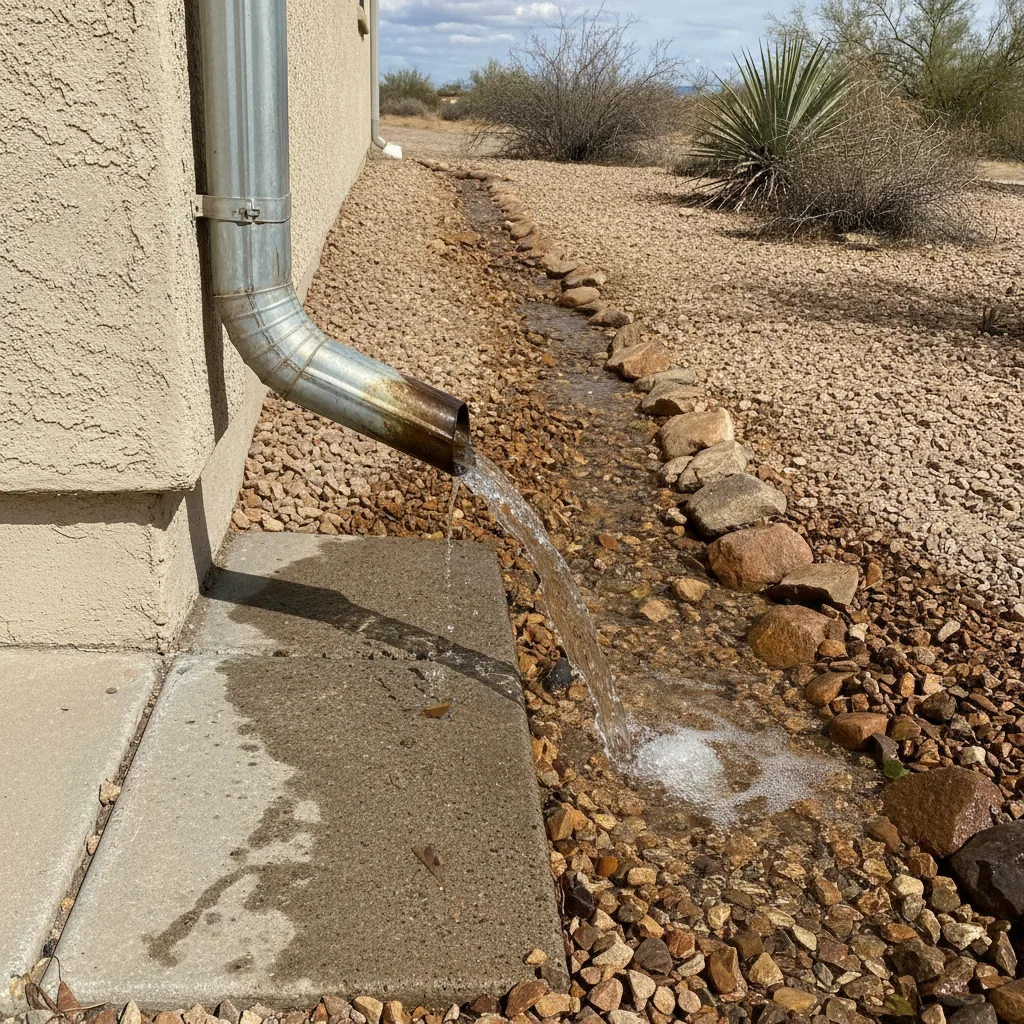
- Direct downspouts and roof runoff away. A downspout dumping right at the foundation soaks one spot every time it rains. Extensions that carry water several feet out make a big difference.
- Fix low spots and pooling. If you see water standing near the foundation after a storm, that’s a spot actively saturating the soil under your home. It’s worth correcting.
Good drainage isn’t glamorous, but in Arizona it prevents more foundation damage than almost anything else. The uneven soaking that monsoon runoff causes is one of the biggest drivers of the differential movement behind cracks.
Notice how consistent-moisture and good-drainage seem to pull in opposite directions — one adds water, the other sheds it. They’re actually the same goal from two angles. The aim is steady, even moisture in the soil that supports the foundation: enough that it never bakes to a hard, shrunken crust, but never so much that storm runoff pools and saturates one section. Gentle year-round watering keeps the baseline up; good grading and downspout extensions keep the sudden monsoon surges from overwhelming it. Together they flatten out the swing, which is the whole point.
Manage Trees and Roots
Trees are wonderful for shade and brutal on foundations if they’re in the wrong spot. Large trees pull enormous amounts of moisture out of the soil, and near a foundation that creates a dry, shrinking zone right where you don’t want one — while the rest of the perimeter stays normal. That’s differential movement again.
- Mind the distance. As a rule of thumb, large trees are best kept away from the foundation — the bigger the mature tree, the more room it wants. If you’re planting new, plant with the grown size in mind.
- Consider a root barrier for existing trees close to the house. A properly installed barrier redirects roots downward and away from the foundation zone, limiting how much they dry out the soil beside your slab.
- Watch for roots near irrigation. Roots chase water, so a leaky line near the foundation can draw them exactly where they cause the most trouble.
Watch for Early Warning Signs
Prevention isn’t only about the soil — it’s also about catching a problem while it’s small and cheap to address. The habits above reduce movement; paying attention catches the movement that slips through anyway.
Get Your Foundation Looked At
A quick inspection tells you what is really going on beneath the surface — and we will send a written estimate.
→ Request a Written EstimateKeep a casual eye out for the early tells:
- Hairline cracks that start to widen over a season.
- Doors or windows that begin sticking when they didn’t before.
- Floors that feel like they’re developing a slope, or tile that cracks in a line.
- Gaps opening where trim meets the wall or ceiling.
- Flaking or spalling concrete at the base of exterior walls — a sign of stem-wall trouble.
Any one of these on its own may be nothing. Several together, or one that’s clearly progressing, is worth a professional look. Catching movement early is what keeps a targeted, affordable repair from becoming a large one — and a foundation inspection will tell you plainly whether what you’re seeing is cosmetic or structural.
The Honest Bottom Line
You can’t out-engineer Arizona’s soil, but you can take most of the punch out of it. Consistent moisture, water that drains away from the house, and smart tree placement prevent the majority of the movement that cracks foundations here. Add a little attention to the early warning signs, and you’ve done nearly everything a homeowner reasonably can.
If you’ve already got cracks and you’re not sure whether prevention is enough or you’re past that point, don’t guess. Request a written estimate and we’ll give you a straight read — including telling you if all you need to do is fix your drainage and keep an eye on it.
Frequently Asked Questions
Does watering my foundation really prevent cracks in Arizona?
In a controlled, consistent way, yes. Keeping the soil around your foundation evenly moist through the dry months reduces the shrink-swell swing that stresses a slab. The key is even, gentle moisture — a soaker hose set out from the foundation, run briefly and regularly. Soaking one spot heavily can actually cause localized movement, so consistency matters more than volume.
What’s the most important thing I can do to prevent foundation problems?
Control the water. Two things matter most in Arizona: keeping soil moisture consistent year-round so the clay doesn’t swing between bone-dry and soaked, and making sure rain and runoff drain away from the foundation rather than pooling against it. Together these take most of the force out of the soil movement that causes cracks.
Should I remove trees near my foundation?
Not necessarily, but manage them. Large trees pull moisture out of the soil and can create a dry, shrinking zone right beside the foundation, causing uneven movement. Keeping big trees a good distance from the house, installing a root barrier for existing close trees, and fixing nearby irrigation leaks usually addresses the risk without removal.
How do I know if my prevention efforts are working?
Watch the early warning signs. If existing hairline cracks stay stable, doors and windows keep operating smoothly, and no new gaps appear at trim or ceilings, your soil-moisture and drainage efforts are likely holding. If you see progression despite good habits, get an inspection — some movement needs a repair, not just prevention.