
When a walkway, driveway, patio, or garage slab sinks in Mesa, you have two proven ways to lift it back to level without tearing it out and pouring new concrete: mudjacking and polyurethane foam injection. Both work. Both have been around long enough to prove themselves. But they solve the problem in genuinely different ways, and the right choice depends on your slab, your soil, and what you care about most.
This is an honest comparison, not a sales pitch for one method. Here is how they actually stack up.
Mudjacking vs. Polyurethane Foam: Quick Answer
If you want the short version: polyurethane foam is the better fit for most Arizona residential slabs because it is lightweight, cures in minutes, resists water, and uses smaller holes. Mudjacking is cheaper up front and can be a reasonable choice for large, heavy slabs where cost is the priority and long-term soil movement is less of a concern. Neither is a scam and neither is magic — the details below explain when each one wins.
How Mudjacking Works
Mudjacking, also called slabjacking or mud pumping, is the older of the two methods. Holes roughly one to two inches across are drilled through the sunken slab. A slurry — usually a mix of cement, sand, and water — is pumped underneath at pressure. The slurry fills the voids below the concrete and its bulk physically pushes the slab back up to grade. The holes are then patched.
It has a long track record and the material is inexpensive. The trade-offs come from what the slurry is: it is heavy, roughly 100 pounds per cubic foot, and it is essentially a wet cement product, so it is vulnerable to the same washout and erosion that sank the slab in the first place. It also needs time to cure before the slab takes full load.
How Polyurethane Foam Works
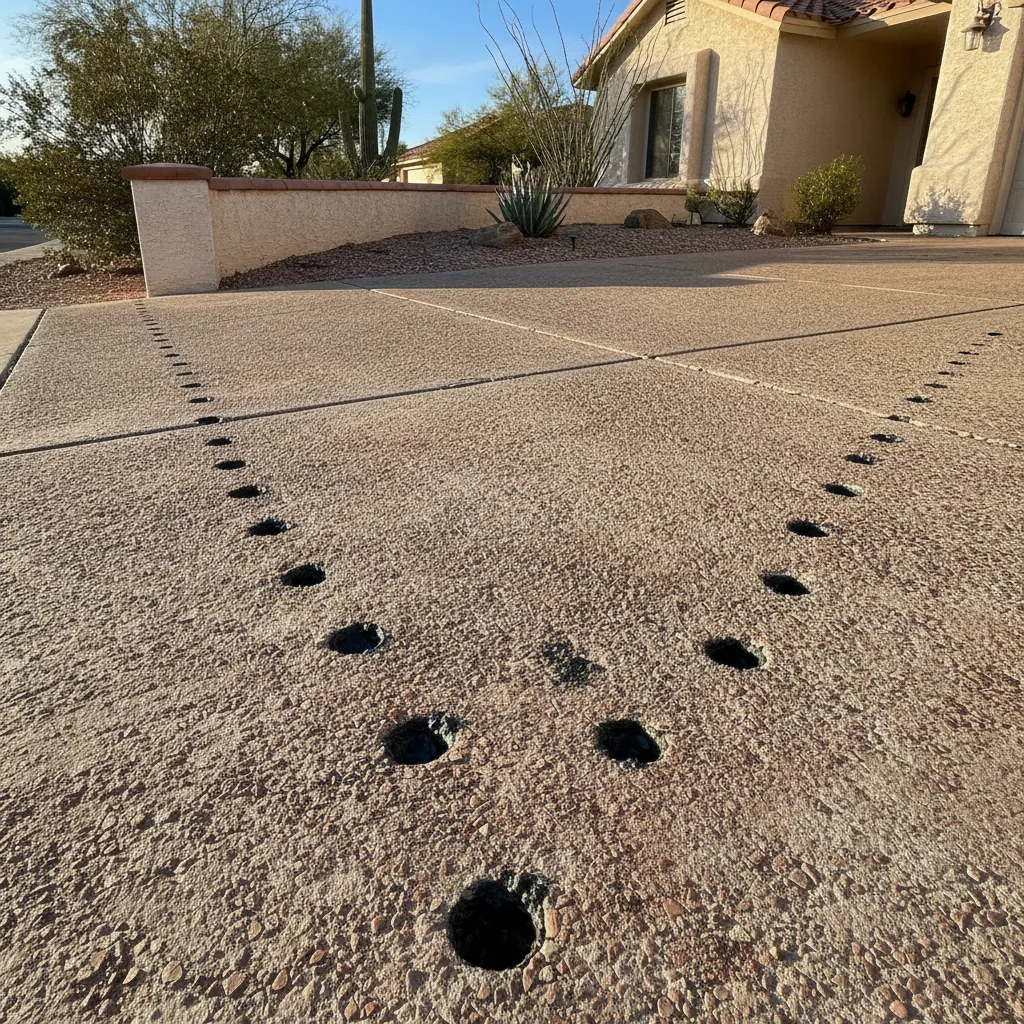
Polyurethane foam injection is the newer approach. Small ports, only about the diameter of a penny, are drilled through the slab. A two-part polyurethane is injected underneath, and it reacts and expands on contact — filling every void, compacting the loose soil, and floating the concrete back to grade with a controlled, steady lift the installer can watch in real time.
The finished foam is remarkably light, on the order of 2 to 4 pounds per cubic foot, and it is closed-cell and waterproof, so it will not wash out, dissolve, or erode. It cures within about 15 minutes, which is why a foam-lifted slab is usually ready for foot traffic almost immediately and vehicle traffic the same day. This is the method behind our polyurethane foam injection work in Mesa.
Head-to-Head: Cost, Cure Time, Weight, Longevity
Here is where the two methods actually differ:
- Cost. Mudjacking is typically cheaper per square foot up front. Foam costs more initially, but the longer service life often makes it the better value over the life of the slab.
- Cure time. Foam cures in roughly 15 minutes; the slab is usable almost right away. Mudjacking slurry needs 24 to 72 hours to cure before full load, so you are staying off it for a day or more.
- Weight. This is the big one in Arizona. Mudjacking adds heavy material — around 100 pounds per cubic foot — on top of the very soil that already proved it could not hold the load. Foam adds almost nothing, around 2 to 4 pounds per cubic foot, so it does not re-burden weak ground.
- Water resistance. Foam is waterproof and shrugs off monsoon runoff and irrigation. Mudjacking material can erode and wash out over time, the same failure mode that caused the original sinking.
- Precision. Foam gives a controlled, incremental lift the technician can fine-tune. Mudjacking is a blunter push and harder to dial in exactly.
- Hole size and appearance. Foam uses penny-sized ports that patch nearly invisibly. Mudjacking uses one-to-two-inch holes that are more noticeable after patching.
- Longevity. Because foam does not wash out or add weight to bad soil, it generally lasts longer. Mudjacking can last many years but is more exposed to the same erosion cycle over time.
Which Is Better for Your Situation
For most Mesa homeowners lifting a driveway, sidewalk, patio, pool deck, or garage floor, polyurethane foam is usually the better long-term answer — mainly because of Arizona’s soil. Our expansive clay and caliche move with every monsoon-drought cycle, and adding heavy slurry on top of ground that already failed once tends to invite a repeat. Foam’s light weight and water resistance sidestep both problems, and the fast cure means less disruption.
Mudjacking still has a place. If you are working with a very large slab, want the lowest up-front price, and the soil underneath is relatively stable, it can be a sensible, economical choice. What matters is that the method is matched to the situation honestly, rather than defaulting to whichever one the contractor happens to sell.
Get Your Foundation Looked At
A quick inspection tells you what is really going on beneath the surface — and we will send a written estimate.
→ Request a Written EstimateOne thing worth saying plainly: if the slab that is sinking is your home’s actual foundation rather than a separate flatwork slab like a driveway, leveling alone may not be the whole story. In that case the underlying soil movement needs to be assessed too, which is a different conversation than lifting a walkway.
How We Level Concrete in Mesa
We diagnose before we quote. That means figuring out why the slab sank in the first place — a washed-out void, poor compaction, a drainage problem, expansive soil — and then recommending the method that fits, rather than the one with the biggest ticket. For most residential flatwork in the East Valley that is foam, but we will tell you honestly if mudjacking makes more sense for your slab.
Mesa Foundation Repair Co. is a local, homeowner-first foundation crew. If you have a sunken driveway apron, a patio that now pools water, or a garage slab that has dropped at the seams, get a written estimate and we will show you what is actually going on underneath and what it will cost to fix it right.
Frequently Asked Questions
Is polyurethane foam or mudjacking better for Arizona soil?
For most Arizona residential slabs, foam is the better fit. Our expansive clay and caliche move with every wet-dry cycle, and mudjacking adds heavy slurry on top of soil that already failed once. Foam weighs a fraction as much and is waterproof, so it does not re-burden weak ground or wash out in monsoon runoff.
How much longer does foam last than mudjacking?
Because foam is closed-cell and waterproof, it will not erode or dissolve the way cement slurry can, and its light weight does not overload the soil. That generally translates to a longer service life. Mudjacking can still last many years, but it is more exposed to the same washout cycle that caused the original sinking.
Is mudjacking cheaper than foam?
Yes, mudjacking is typically cheaper per square foot up front because the cement-and-sand slurry is inexpensive. Foam costs more initially, but its longer life and faster, less disruptive installation often make it the better value over the life of the slab.
How soon can I use my driveway after leveling?
With polyurethane foam, the material cures in about 15 minutes, so a slab is usually ready for foot traffic almost immediately and vehicles the same day. Mudjacking slurry needs 24 to 72 hours to cure before it takes full load, so you generally stay off it for at least a day.