
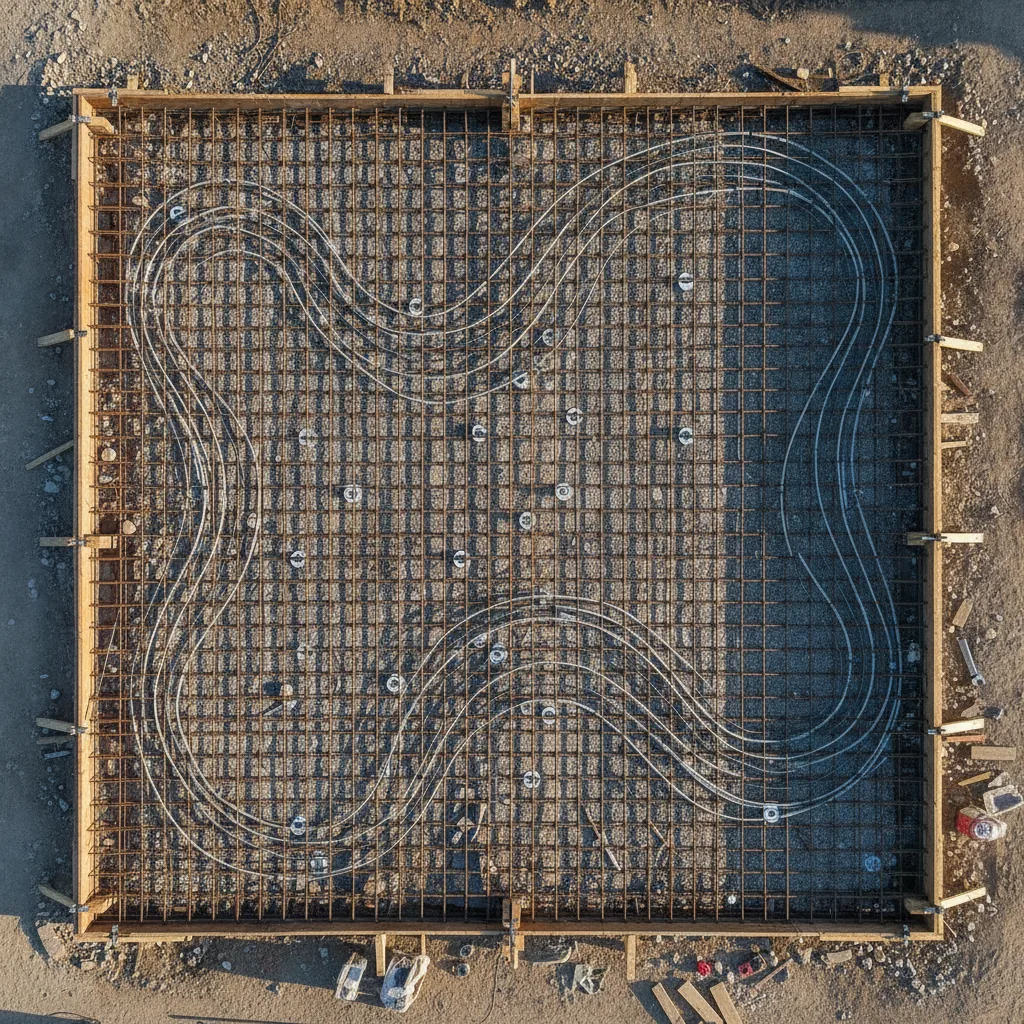
If your Mesa home was built from the 1980s onward, there is a good chance it sits on a post-tension slab — and there is an even better chance nobody ever told you. It usually does not matter in daily life. But it matters enormously the day someone wants to cut, core, or anchor into your concrete, because a post-tension slab hides high-tension steel cables that are genuinely dangerous to hit.
Here is what separates the two common foundation types, how to figure out which one is under your feet, and why it is worth knowing before any slab work happens.
Post-Tension vs. Conventional Slab: What’s the Difference
Both are concrete slabs poured on the ground. The difference is how the steel inside is used.
A conventional slab is reinforced with a grid of steel rebar embedded in the concrete. The rebar sits there passively, adding tensile strength so the slab resists cracking as loads and soil movement push and pull on it. It is the traditional method and has been used for a very long time.
A post-tension slab works differently. Instead of a passive rebar grid, it contains steel cables called tendons running through the slab inside plastic sheathing. After the concrete cures, those tendons are pulled extremely tight with a hydraulic jack and anchored at the edges. This puts the entire slab under permanent compression, essentially squeezing it together. A slab held in compression resists cracking far better and can span across soil movement more effectively — which is exactly why post-tension became popular on Arizona’s expansive soils. Many East Valley tract homes from the 80s onward use it for that reason.
How to Tell Which Foundation You Have
Most homeowners genuinely do not know, and it is not always obvious. A few ways to find out:
- Look at the garage or slab edge. Post-tension slabs are often stamped or marked with a warning like “POST-TENSIONED SLAB — DO NOT CUT OR CORE.” Builders frequently placed a plaque or stamped the concrete near the garage.
- Check for anchor points. Along the perimeter you may find small patched pockets where the tendons were tensioned and the ends cut off and sealed.
- Look at your build date and area. Post-tension is very common in Valley homes built from the 1980s forward, especially in the newer master-planned communities.
- Pull your building records or original plans if you have them; the foundation type is specified there.
- Have it scanned. The only way to know for certain, and to locate the tendons, is a professional scan with ground-penetrating radar, which maps exactly where the cables run before anyone touches the slab.
If you are not sure and any work involving the slab is coming up, do not guess. Confirm it first.
Why It Matters Before Any Slab Work
This is the part that is genuinely important for safety. The tendons in a post-tension slab are under tremendous tension — thousands of pounds of force held in each cable. If a saw, core drill, or anchor bolt strikes one, the cable can fail violently, which is both a serious injury hazard and a structural problem, because cutting a tendon relieves the compression that keeps that whole section of slab working as designed.
This comes up more often than people expect: a plumber cutting the slab to reach a pipe, someone installing a floor drain, a homeowner anchoring a workbench or a car lift into the garage floor, a remodel that moves plumbing. On a conventional slab, hitting a piece of rebar is a nuisance. On a post-tension slab, hitting a tendon can be dangerous and expensive.
The rule is simple and non-negotiable: on a post-tension slab, locate the tendons before you cut, core, or anchor anything. That means a ground-penetrating radar scan to map the cables, done by someone who understands what they are looking at.
How Each Is Repaired
The repair approach differs meaningfully between the two.
Get Your Foundation Looked At
A quick inspection tells you what is really going on beneath the surface — and we will send a written estimate.
→ Request a Written EstimateConventional slab repairs can involve sealing and reinforcing cracks, stabilizing settled sections, lifting the slab, and addressing the soil underneath. Because the reinforcement is a passive rebar grid, working around it is comparatively straightforward.
Post-tension slab repairs require specialized knowledge. The tendons must be located and their condition assessed, because a failed or corroded tendon behaves differently than a cracked conventional slab. Any repair has to work with the tension system, not against it — you cannot simply cut in and reinforce the way you might a rebar slab. In some cases tendons can be repaired or re-tensioned; in others the fix is designed specifically around preserving the compression in the rest of the slab. This is genuinely specialized work, which is why post-tension slab repair should only be handled by a contractor who does it regularly.
Never Cut a Slab Without Locating Tendons
If you take one thing from this: before any cutting, coring, drilling, or anchoring into a slab that might be post-tension, get it scanned and mapped first. It is a small, quick step that prevents a dangerous and costly mistake. Any reputable contractor or plumber working on a Valley home should already treat this as standard practice — and if yours does not, that tells you something.
Mesa Foundation Repair Co. is a local, homeowner-first foundation crew, and we handle both conventional and post-tension foundations, including the scanning that has to come first. If you are not sure which foundation you have, or you have a repair or remodel coming up and want the slab located safely before anyone cuts, get a written estimate and we will start by confirming exactly what is under your home.
Frequently Asked Questions
How do I know if my house has a post-tension slab?
Look for a stamped warning near the garage that says the slab is post-tensioned and should not be cut, and check for small patched anchor pockets along the slab edge. Homes built in the Valley from the 1980s onward often use it. To be certain and to locate the cables, have the slab scanned with ground-penetrating radar.
Why is it dangerous to cut a post-tension slab?
The steel tendons inside are held under thousands of pounds of tension. If a saw or drill strikes one, it can fail violently, which is a serious injury hazard, and cutting it relieves the compression that keeps that section of slab working as designed. That is why the tendons must be located before any cutting, coring, or anchoring.
Can a post-tension slab be repaired?
Yes, but it requires specialized knowledge. The tendons must be located and assessed, and any repair has to work with the tension system rather than against it. Depending on the situation, tendons may be repaired or re-tensioned, or the fix is engineered to preserve the compression in the rest of the slab. It should only be done by a contractor experienced with post-tension foundations.
Is a post-tension slab better than a conventional one?
Neither is simply better; they suit different situations. Post-tension slabs hold the concrete in compression, so they resist cracking and span soil movement well, which is why they became popular on Arizona’s expansive soils. Conventional rebar slabs are proven and easier to work on. What matters most is knowing which one you have before any slab work.