
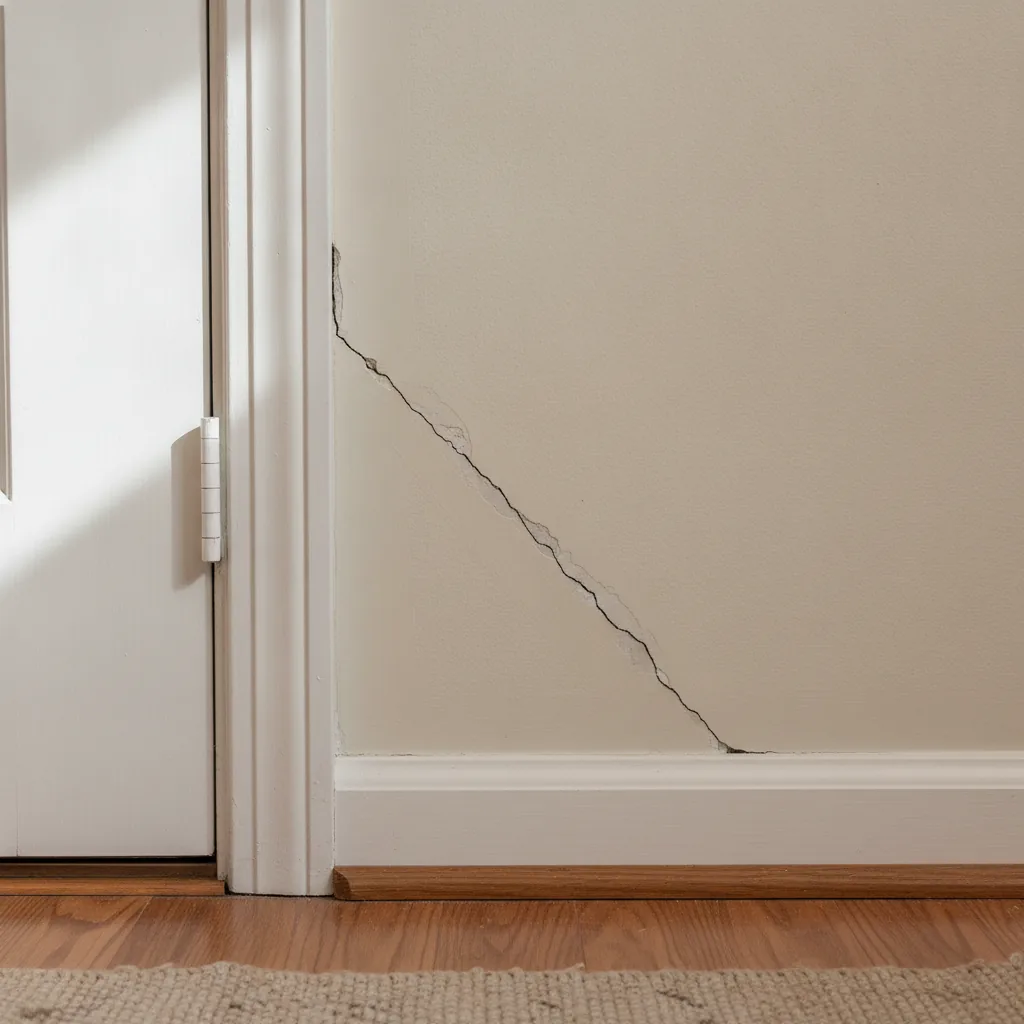
Foundation problems almost never start with a dramatic event. In Mesa, they creep in — a door that suddenly won’t latch, a crack that’s a little wider than it was last summer, a spot on the floor that feels like it’s tilting. Individually, any one of these can be harmless. The skill is in recognizing the pattern, because several of them together is how soil movement quietly tells you it’s time to look closer.
Below are the 10 warning signs worth knowing, roughly in the order homeowners tend to notice them. For each, we’ll explain what it actually means and how to gauge whether it’s cosmetic or something structural. None of these is a reason to panic — but a few of them together is a good reason to get a straight, professional read.
It helps to know why Mesa homes show these signs in the first place. Much of the East Valley sits on expansive clay and caliche — soils that swell when they’re wet and shrink when they dry, and do it far more dramatically than the ground in most of the country. Add Arizona’s yearly swing from bone-dry to monsoon-soaked and back, and the soil under a home is constantly rising and falling, often unevenly from one corner to the next. Your foundation is strong, but it’s built to sit on stable support, not to bridge ground that keeps moving. The warning signs below are simply how that movement telegraphs itself up through the structure — which is why they tend to appear in clusters and in predictable places.
Cracks in Walls, Floors, and Stem Walls
1. Stair-step cracks in block or stucco
When cracks climb diagonally in a stair-step pattern through block walls or stucco — especially near doors and windows — that’s a classic sign of differential foundation movement. The corners and openings are the least flexible parts of a structure, so they crack first when one part of the home moves relative to another. Stair-step cracking is one of the more meaningful signs on this list.
2. Cracks wider than a quarter inch, or that keep growing
Almost every home has some hairline cracks, and most are cosmetic shrinkage from concrete curing. The ones worth attention are wider than roughly a quarter inch, or ones that visibly grow from season to season. Width and progression are the tells. A good habit: mark the end of a crack with a pencil and date, so you can tell later whether it actually moved.
3. Spalling or flaking concrete at the base of exterior walls
On Mesa’s many stem-wall homes, look at the short concrete wall your house sits on. If the concrete is flaking, crumbling, or you can see rusting rebar showing through, that’s spalling — and it’s one of the most common foundation failures we see in Arizona. Moisture reaches the steel reinforcement, the rebar rusts and expands, and it pushes the concrete off from the inside. It’s very repairable, but it doesn’t fix itself. You can read more on our stem wall repair page.
Sticking Doors and Windows
4. Doors that suddenly stick or won’t latch
A door that used to swing and latch cleanly and now drags, sticks, or won’t line up with its strike plate is telling you the frame around it has moved. When a foundation shifts, it racks the framing slightly out of square, and doors are sensitive enough to show it. The keyword is suddenly — Arizona’s seasonal humidity swings are small, so a door that changes noticeably is more likely structural than weather.
5. Windows that stick or show gaps at the frame
Same principle as doors. Windows that have started binding, or where you see a new gap opening between the window frame and the wall, point to the opening going out of square. A single sticky window in a humid month may be nothing; several across the house, or gaps appearing, is a pattern.
Uneven or Sloping Floors
6. Floors that feel like they slope
If you’ve noticed a room feels subtly downhill, or a marble seems to roll on its own, that’s worth checking. An easy home test: set a ball or a round pencil on the floor in a few rooms and see if it rolls consistently in one direction. A slope you can feel usually reflects movement in the slab beneath it.
7. Cracked tile or grout in a line
Tile is rigid and unforgiving, which makes it an early messenger. When the slab beneath flexes, tile and grout crack — and a crack that runs in a relatively straight line across a room (rather than a single chipped tile from a dropped pan) often traces movement in the foundation underneath.
Gaps Around Trim and Cabinets
8. Gaps where walls meet the ceiling, or trim pulls away
When baseboards, crown molding, or door trim start separating from the wall, or a gap opens where a wall meets the ceiling, the framing is moving relative to itself. Caulk that keeps cracking open at the same seam no matter how often you redo it is a quieter version of the same signal.
9. Cabinets or counters separating from the wall
Kitchen and bathroom cabinets are fixed to the wall, so when a gap opens between the counter and the wall or the cabinets tilt slightly, it can reflect movement in the floor and framing they’re anchored to. It’s easy to miss until you notice the backsplash caulk has pulled apart.
Get Your Foundation Looked At
A quick inspection tells you what is really going on beneath the surface — and we will send a written estimate.
→ Request a Written Estimate10. Nail pops and a tilting chimney
Two subtler ones to round out the list. Nail pops — small circular bumps or cracks in drywall where a nail head has pushed through the paint — can appear as framing shifts. On their own they’re often minor, but a sudden rash of them across several walls is worth noting. And an exterior chimney that’s leaning away from the house, or has a widening gap where it meets the wall, is a sign the ground under that heavy structure is moving. A chimney is one of the heaviest single loads on a home, so it concentrates settlement — a tilting chimney in particular is worth prompt attention.
What to Do If You Spot These Signs
Here’s the honest framing, because the goal isn’t to scare you into anything. Any single sign on this list can be cosmetic. Old homes settle, concrete cures and cracks, and a sticky door in one humid week means little. What matters is the pattern and the progression:
- One minor sign, stable over time? Reasonable to monitor. Mark it, date it, and watch.
- Several signs together, or any that are clearly worsening? That’s the point to get a professional look — not because your house is failing, but because early diagnosis keeps a targeted, affordable repair from becoming a large one.
- Wider-than-quarter-inch cracks, horizontal cracks, visible rebar, or a tilting chimney? These carry more weight and are worth having assessed sooner.
A simple way to stay ahead of it: pick a warm, dry weekend once or twice a year and do a slow lap of your home, inside and out. Note the cracks, mark and date the ends of any you’re watching, test the doors and windows, and glance at the base of the exterior walls. It takes fifteen minutes, and it turns “I think that crack got bigger” into something you can actually confirm. Most Mesa homeowners who catch foundation movement early do it exactly this way — not through a dramatic discovery, but by noticing that a few small things all trended the same direction over a season.
The reliable way to know whether what you’re seeing is cosmetic or structural is a proper foundation inspection — someone who knows Arizona soil measuring elevations, checking the crack patterns, and telling you plainly what’s going on. If it’s nothing, a straight shop will tell you that too, and you can stop worrying.
No scare tactics and no pressure — just a clear read on what the ground is doing under your home. If you’re seeing a few of these signs and want a straight answer, request a written estimate and we’ll come tell you what’s actually happening.
Frequently Asked Questions
What are the most serious signs of foundation problems?
Horizontal cracks, cracks wider than about a quarter inch, stair-step cracks in block walls, visible rusting rebar in a spalling stem wall, and a chimney tilting away from the house carry the most weight. Sudden sticking doors and clearly sloping floors are also strong signals. Any of these, especially in combination, is worth having assessed sooner rather than later.
Are foundation cracks always a serious problem?
No. Almost every home has some hairline cracks, most of which are cosmetic shrinkage from concrete curing. What matters is the width, pattern, and whether the crack is growing. Cracks wider than a quarter inch, stair-step patterns near openings, and horizontal cracks deserve attention; a stable hairline usually just needs monitoring.
How do I know if my sticking door is a foundation issue or just humidity?
Arizona’s seasonal humidity swings are small, so a door that changes noticeably is more likely structural than weather-driven. The bigger tell is the pattern: one sticky door in a humid week is probably nothing, but several doors and windows binding across the house — especially alongside cracks or gaps at the trim — points to foundation movement.
Should I get an inspection if I only see one warning sign?
If it’s a single minor sign that stays stable over time, it’s reasonable to monitor it — mark it, date it, and watch. But if you notice several signs together, any that are clearly worsening, or a high-weight sign like a horizontal crack or tilting chimney, get a professional inspection. Early diagnosis keeps a small, targeted repair from becoming a large one.