
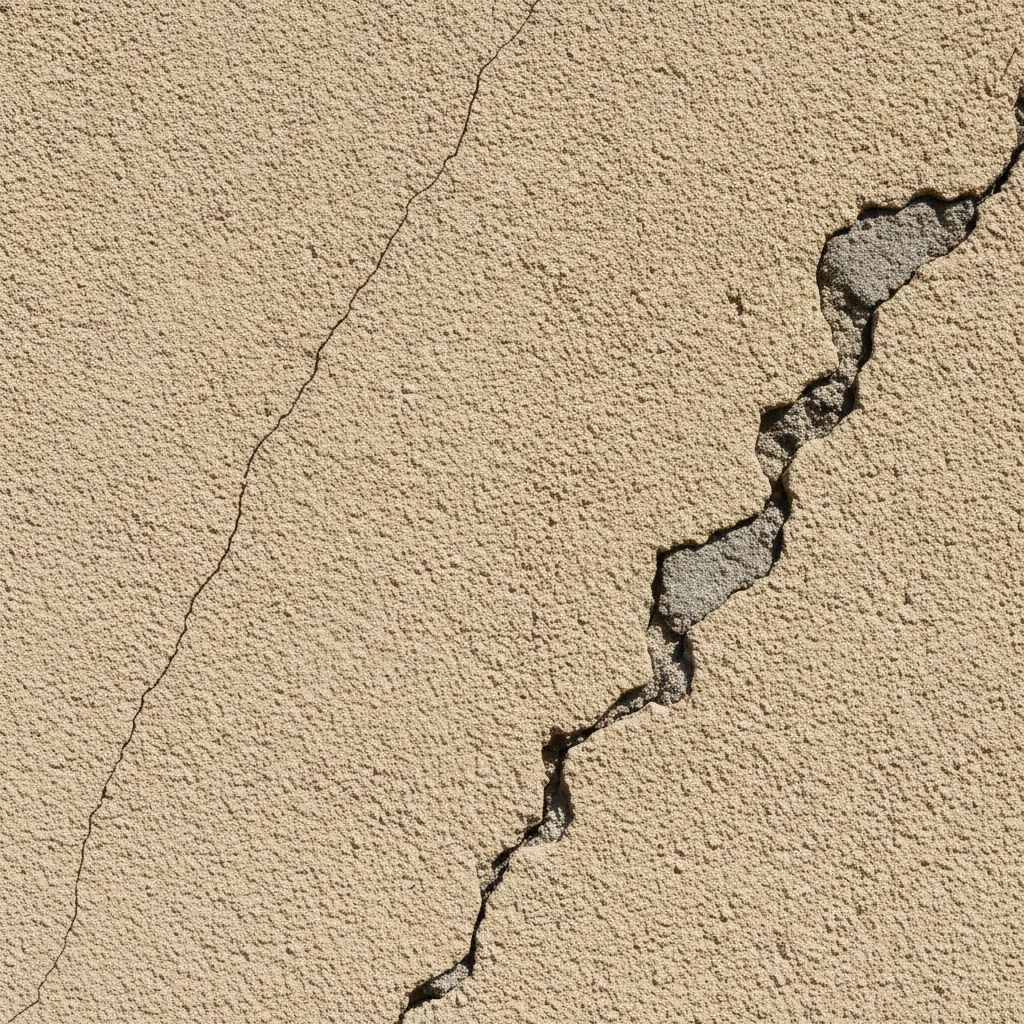
Not every crack is created equal. Some are your house shrugging off a season of Mesa heat and monsoon, harmless as a wrinkle. Others are the first visible sign that the ground under your foundation is on the move. Knowing which is which saves you from two expensive mistakes: panicking over nothing, or ignoring something real until it costs five times as much to fix.
The good news is you can do a solid first assessment yourself with nothing but a ruler, a coin, and a pencil. Here’s how the pros read a crack.
How to Tell If a Foundation Crack Is Structural
A cosmetic crack is confined to the surface — the stucco, the drywall, the paint. The material split, but the structure behind it didn’t move. A structural crack means the concrete or masonry that holds your house up has actually shifted, usually because the soil beneath it swelled, shrank, or settled.
The difference shows up in five readable signs. Any one of them alone might be nothing. Two or more together is a pattern worth a professional look.
The 5 Warning Signs of a Structural Crack
Run through this list with the crack in front of you:
- 1. It runs horizontally. A crack traveling sideways across a foundation or stem wall is the biggest red flag. Horizontal cracks usually mean soil pressure pushing against the wall, not just concrete curing. Vertical and diagonal cracks are generally less serious.
- 2. It’s wider than a quarter inch. Roughly the width of a pencil. Cosmetic cracks are typically hairline to 1/8 inch; structural movement tends to open cracks wider.
- 3. The two sides don’t line up. This is called displacement — one side of the crack sticks out past the other, or one side has dropped. If you can catch a fingernail or slide a coin where the surfaces have shifted out of plane, the concrete moved, and that’s structural until proven otherwise.
- 4. It’s part of a stair-step pattern. In block or brick, cracks that climb the mortar joints diagonally like a staircase — especially near doors and windows — point to differential settlement, where one section of the home is sinking relative to another.
- 5. It comes with other symptoms. Doors and windows that suddenly stick or won’t latch, floors that slope enough to feel underfoot, gaps opening where the baseboard meets the wall or the wall meets the ceiling. A crack plus these is the house telling you it’s moving.
Miss all five and see a thin, vertical, flush, stable line? That’s almost certainly cosmetic. Hit two or more and you’re looking at something worth a proper crack diagnosis before it progresses.
Crack Direction and What It Means
Direction alone is one of the fastest reads you can make:
- Vertical cracks (running straight up and down): usually the least concerning. Most come from normal concrete shrinkage and minor settlement.
- Diagonal cracks (roughly 30–75 degrees): often from differential settlement as one corner moves. Worth watching, especially if wider than 1/4 inch or radiating from a window corner.
- Horizontal cracks (running sideways): the most serious. These signal lateral pressure from expanding soil or hydrostatic force and deserve professional evaluation.
- Stair-step cracks (climbing the mortar joints in block): a classic sign of settlement in Mesa’s masonry and block homes.
In the East Valley specifically, stair-step cracking near openings is common because our expansive clay lifts and drops the edges of a slab or footing with each wet-dry cycle. It’s readable, and it’s usually fixable when caught.
How to Measure and Monitor a Crack
Before you call anyone, spend five minutes documenting the crack. This turns a vague worry into real data:
Get Your Foundation Looked At
A quick inspection tells you what is really going on beneath the surface — and we will send a written estimate.
→ Request a Written Estimate- Measure the width at its widest point with a ruler. Note whether it’s hairline, around 1/8 inch, 1/4 inch, or wider.
- Check for displacement. Run a fingernail or the edge of a coin across the crack. If one side is proud of the other, write that down — it’s important.
- Mark the ends. Draw a small pencil line across each end of the crack and write today’s date next to it. This is your baseline.
- Photograph it with something for scale — a coin or a tape measure in the shot.
- Re-check in 30–90 days. If the crack grows past your pencil marks or the width increases, it’s active movement. If nothing changes, it has likely stabilized.
That simple record tells a contractor more than a phone call ever could, and it protects you from being talked into a repair for a crack that’s actually been stable for years.
When to Get It Inspected
Do the self-check, and use these thresholds to decide:
- Monitor yourself: a thin, vertical, flush crack that isn’t growing.
- Get it inspected: any horizontal crack, any crack wider than 1/4 inch, any displacement, a stair-step pattern, active growth, or a crack paired with sticking doors and sloping floors.
A licensed foundation inspection confirms whether the movement is active and what caused it — soil, drainage, a plumbing leak — and gives you a written, right-sized repair plan if you need one. And if your crack is cosmetic, a straight-talking contractor will tell you to save your money. If you’d like that kind of honest read, get a written estimate and stop guessing.
Frequently Asked Questions
What does a structural foundation crack look like?
A structural crack is typically wider than a quarter inch, runs horizontally or in a stair-step pattern through block, and shows displacement — one side pushed out past the other. It often comes with sticking doors, sloping floors, or gaps at the trim. Thin, vertical, flush cracks that aren’t growing are usually cosmetic.
Are vertical foundation cracks structural?
Usually not. Vertical cracks most often come from normal concrete shrinkage and minor settlement and are the least concerning direction. They become worth investigating if they widen past a quarter inch, show displacement, or are still actively growing when you monitor them.
How do I know if a crack is getting worse?
Mark the ends of the crack with a pencil, write the date, and photograph it with a coin for scale. Re-check in 30 to 90 days. If the crack extends past your marks or opens wider, it’s active movement worth a professional look. If it stays put, it has likely stabilized.
Can a cosmetic crack turn into a structural one?
A cosmetic surface crack won’t become structural on its own, but the same soil movement that produced it can worsen and cause real structural cracking over time — especially in Mesa’s expansive clay. That’s why monitoring matters: watch whether the crack is stable or growing, and get a professional read if it starts to change.