
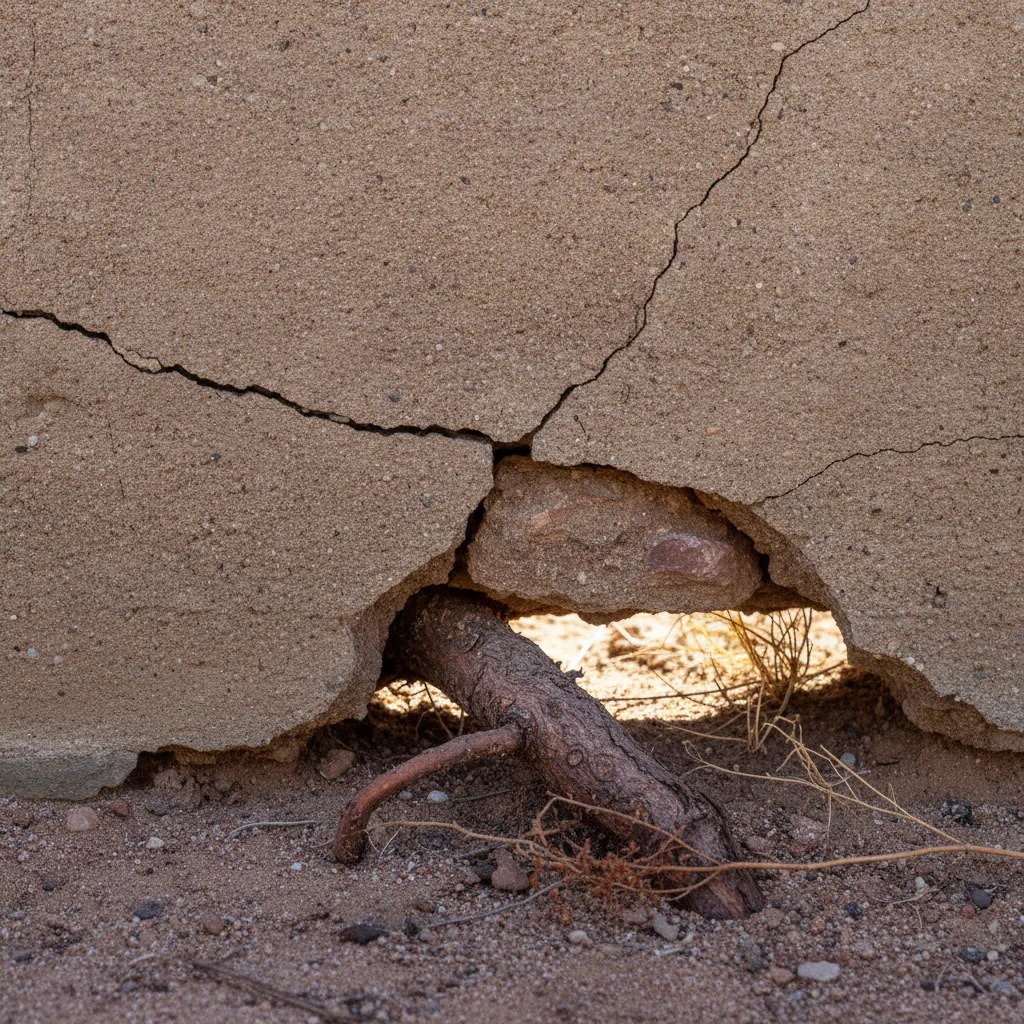
Let’s be honest about the two ways this usually goes. Either someone tells you a hairline crack is an emergency to sell you a repair you don’t need, or you tell yourself it’s nothing and paint over it for the third year running. The truth sits in between, and it’s worth understanding — because some cracks are perfectly safe to monitor, and some get meaningfully more expensive every season you wait.
This isn’t a scare piece. It’s a straight look at what actually happens when a real, active foundation crack goes ignored, so you can tell the difference between patience and procrastination.
What Happens If You Ignore a Foundation Crack
Here’s the honest answer: nothing happens to a cosmetic crack, and quite a lot happens to a structural one. A thin, stable shrinkage crack can sit there for the life of the house doing no harm. But a crack driven by active soil movement doesn’t stay the same size. The ground under a Mesa home keeps swelling and shrinking with every monsoon and dry spell, and each cycle works the crack a little wider. Ignoring that isn’t saving money — it’s deferring a bill that grows interest.
The key distinction is whether the crack is active. A stable crack is a scar. An active crack is a symptom of a problem that’s still happening.
How Small Cracks Become Big Problems
A structural crack rarely stays a lone hairline. Here’s the typical progression when the underlying movement isn’t addressed:
- The crack widens. Each wet-dry soil cycle in the East Valley opens it a little further. What was a coin-thin line becomes something you can fit a fingertip into.
- It spreads. One crack becomes a network as stress finds new paths — often radiating from door and window corners.
- Displacement sets in. The two sides shift out of plane, one dropping or pushing past the other. Now the concrete has actually moved, not just split.
- Secondary damage appears. Doors stop latching, floors start to slope, tile cracks in a line, and gaps open where the baseboard meets the wall.
The repair also changes character as it progresses. A crack caught early can often be handled with a targeted crack repair. Left to widen with real settlement behind it, the same spot may eventually need settlement stabilization — a bigger, costlier scope of work. That’s the real cost of waiting: not that the crack “gets scary,” but that the fix quietly graduates to a more involved one.
Water, Pests, and Secondary Damage
Even when a crack isn’t structurally urgent, an open crack is a doorway, and that causes its own headaches over time:
- Water intrusion. Monsoon rain and irrigation find their way into an open foundation or stem-wall crack. In Arizona, that moisture is especially damaging because it reaches the rebar inside the concrete.
- Rebar corrosion and spalling. When water reaches the steel in a stem wall, the rebar rusts and expands, flaking the concrete off the surface — the classic spalling you see at the base of many older Mesa homes. This is one of the most common ways a small, ignored crack turns into a real repair.
- Pest entry. Cracks give scorpions, ants, and other desert pests a highway into the wall cavity and the home.
- Cosmetic damage inside. As the structure flexes, drywall cracks, trim separates, and paint splits — small repairs that add up.
None of this is dramatic on any single day. It’s the accumulation over seasons that turns a minor line into a genuine project.
The Cost of Waiting
The math on foundation cracks is unusual: the problem doesn’t just fail to improve, it compounds. A crack sealed early addresses one issue. The same crack ignored for a few years can involve moisture damage to the rebar, more concrete to restore, secondary drywall and door repairs, and sometimes stabilization of the movement itself. You’re not paying for one repair anymore — you’re paying for a cascade.
There’s a resale cost too. A buyer’s inspector will find an active, widening crack, and an unaddressed structural issue gives buyers leverage to negotiate far more off the price than the repair would have cost you to handle calmly, on your own timeline.
Get Your Foundation Looked At
A quick inspection tells you what is really going on beneath the surface — and we will send a written estimate.
→ Request a Written EstimateWhen It’s Still Safe to Monitor
Now the reassuring part, because not every crack needs action. It’s genuinely fine to keep watching — no repair required yet — when the crack is:
- Thin (hairline to about 1/16 inch) and vertical.
- Flush — the two sides sit level, no displacement.
- Stable — you marked the ends with a pencil, dated it, and it hasn’t grown in months.
- Not paired with sticking doors, sloping floors, or trim gaps.
For a crack like that, monitoring is the correct response. Mark it, photograph it, and check it a couple times a year. The moment it starts to grow, widen past a quarter inch, show displacement, or bring friends, that’s your signal to get it looked at.
If you’re not sure which category your crack falls into, that’s exactly what an honest inspection is for. We’ll tell you plainly whether to fix it or just keep an eye on it — and if it’s the watch-and-wait kind, we’ll say so. Get a written estimate and trade the nagging worry for a straight answer.
Frequently Asked Questions
Is it safe to live in a house with a cracked foundation?
In most cases, yes. The large majority of foundation cracks are cosmetic or slow-moving and don’t make a home unsafe to occupy. It’s worth getting a professional read when a crack is horizontal, wider than a quarter inch, shows displacement, or comes with sloping floors — but a stable hairline crack is not a safety emergency.
How fast do foundation cracks get worse?
It varies with the soil and drainage. In Mesa, cracks driven by expansive clay tend to widen gradually over seasons rather than suddenly, opening a little with each monsoon-and-drought cycle. A stable crack may not change for years; an active one can noticeably widen within a year or two. Monitoring with dated pencil marks tells you which one you have.
What happens if water gets into a foundation crack?
Water in an open foundation or stem-wall crack can reach the rebar inside the concrete, causing it to rust and expand. That flakes the concrete off the surface — called spalling — which is one of the most common ways a small ignored crack in an Arizona home turns into a real repair. Open cracks also let in pests.
Can I just fill a foundation crack myself and forget about it?
You can seal a cosmetic surface crack yourself to keep moisture out, and for a stable hairline that’s often fine. But filling an active structural crack without addressing the soil movement behind it just hides the symptom — the crack reopens with the next season. If a crack is widening or shows displacement, get it diagnosed before you fill it.